The Stable of Emotions
Somewhere along the way, most of us learned a strange equation. We learned that what we feel is who we are.
When anger rises, we say: I am angry. When anxiety settles in the chest on an otherwise ordinary Tuesday, we say: I am anxious. When grief arrives, we do not report that grief has arrived. We say: I am devastated. The feeling and the self collapse into a single word, and for as long as that word lasts, we are fully consumed by it.
I want to offer a different framework. Not a prescription for how to feel. Not a promise that the harder emotions can be eliminated or transcended. Just a different way of standing in relation to what moves through you.
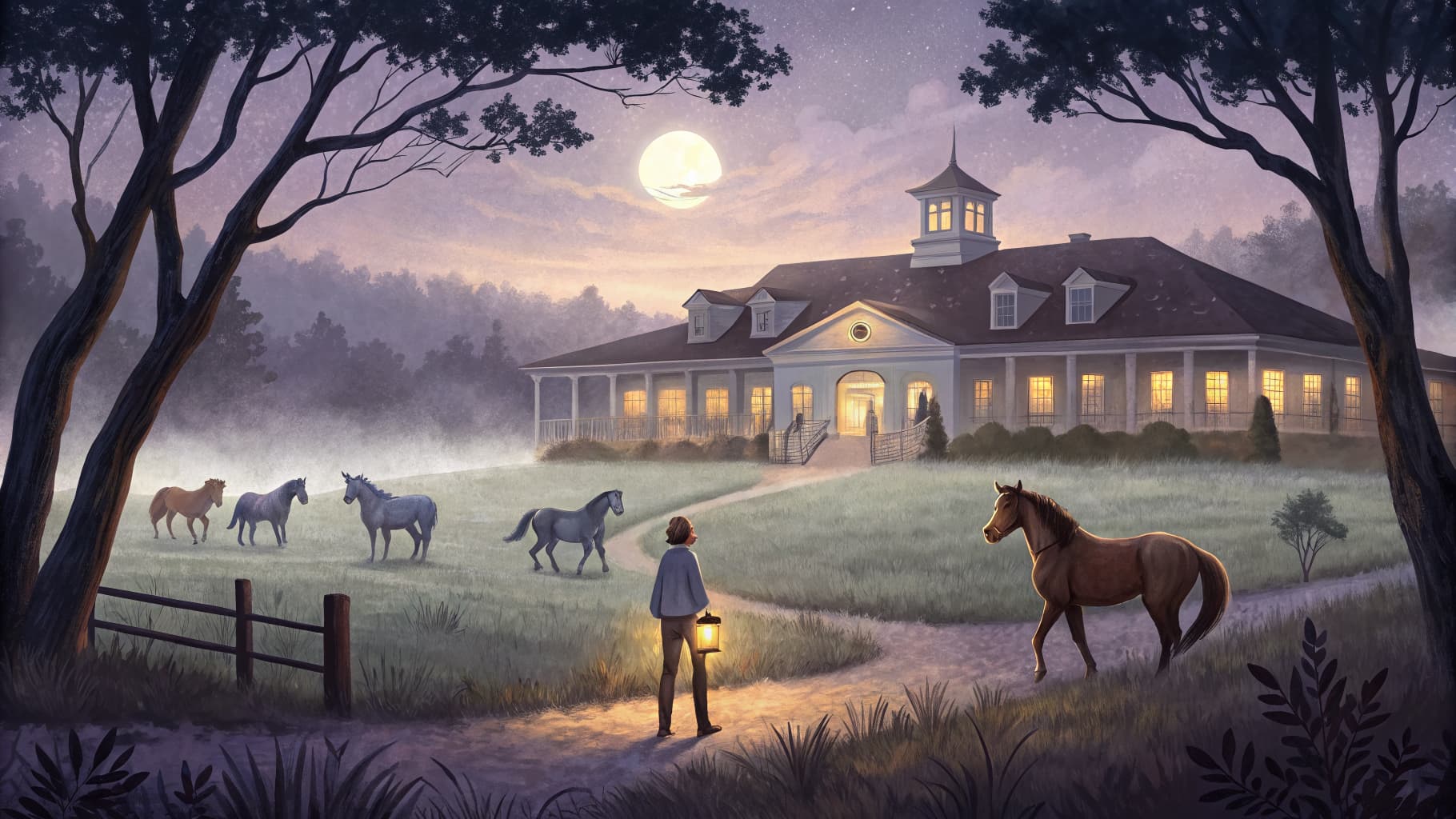
Your mind is an estate. You, as awareness, are the lord of this estate. But somewhere along the way, the lord forgot he was the lord. He stopped observing the grounds and started believing he was the grounds. The buildings became his identity. The weather became his mood. And the horses in the stable became so familiar that he could no longer tell where they ended and he began.
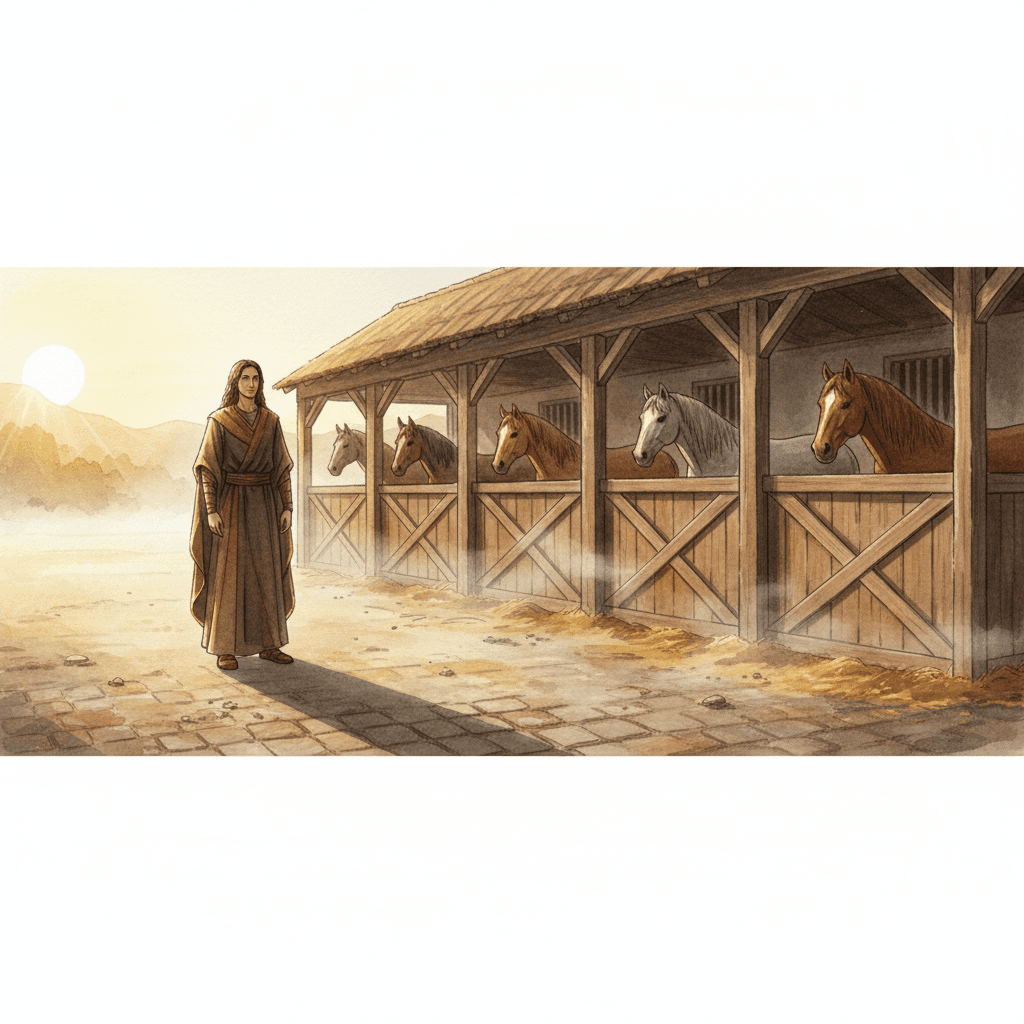
Among the structures on this estate stands a stable. Inside that stable live magnificent horses, each one distinct in temperament and purpose, each one capable of extraordinary speed and force. These horses are your emotions.
The question worth sitting with is this: are you riding them, or have you forgotten that you ever got on?
The Eager Ones
Some horses are kept near the front of the stable. They have stirrups already fitted. They lean into the gate. These are the emotions the nervous system learned, over long evolutionary time, to deploy quickly. The problem is that the nervous system optimized for a world that no longer exists, and now it cannot reliably distinguish a genuine emergency from a difficult conversation.
Anger: The Powerful Stallion
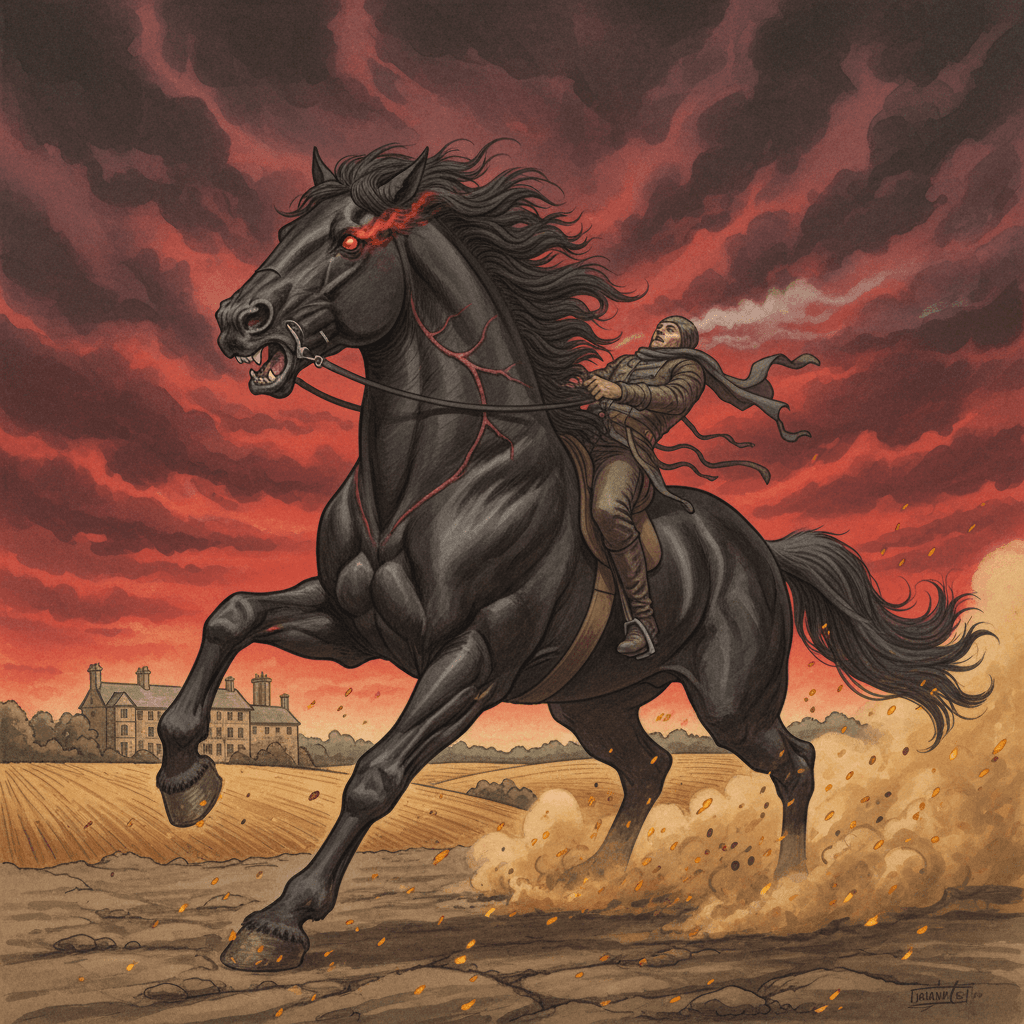
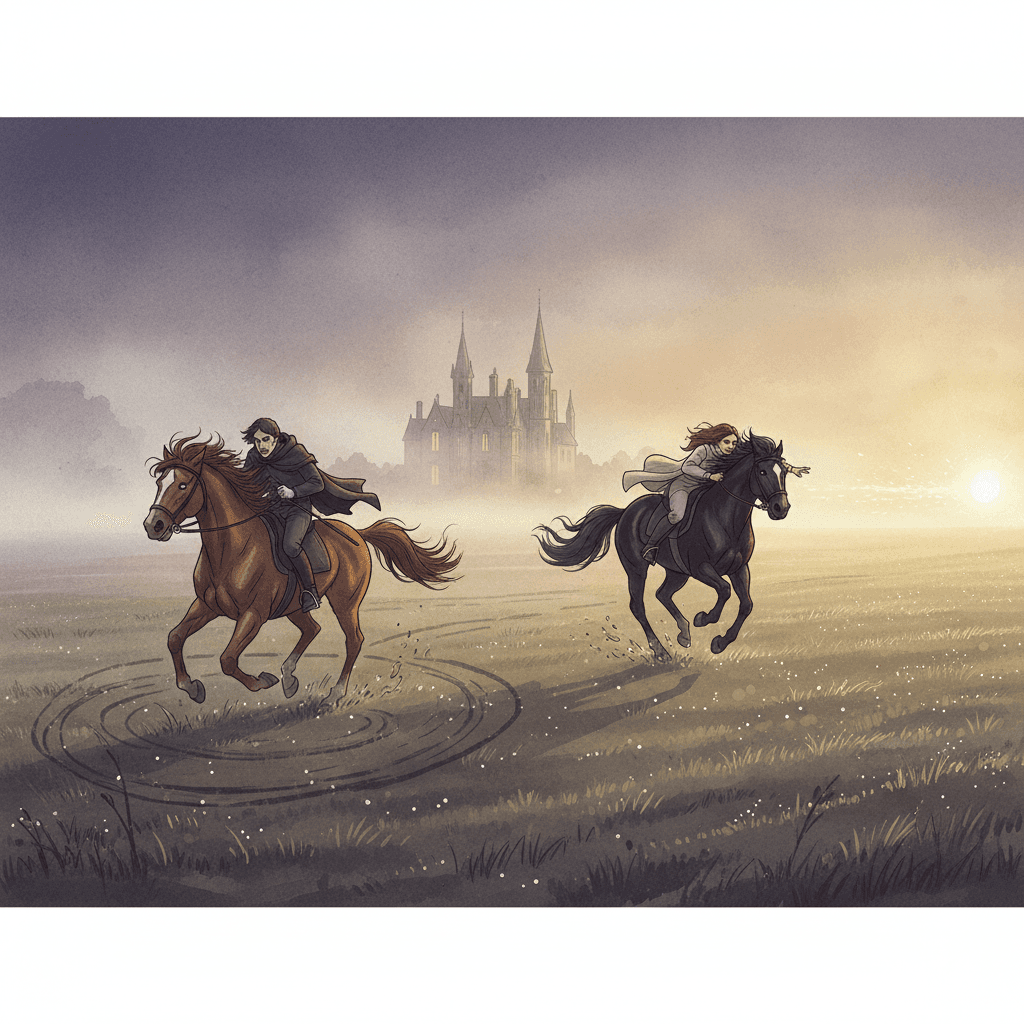
Anger is the strongest horse in the stable, and he has what I think of as evolutionary emergency stirrups. They are fitted perfectly for your foot. You barely need to reach for them. In the context of genuine physical danger, this is brilliant engineering. You are on his back before your conscious mind has finished processing the threat. You are already moving.
In modern life, these same stirrups activate for traffic, for slights, for a tone of voice you did not appreciate. The design has not changed. The context has.
What makes Anger genuinely difficult is the speed of the ride. By the time you notice the wind in your hair, you are already deep in the dark valley he prefers. The full cycle, from trigger to explosive gallop to the particular valley of regret that follows, can complete itself in seconds. You said the thing. You sent the message. You were already down the road before you had any real choice in the matter.
There is a harder observation worth making here. Sometimes a fall, a genuine tumble from Anger's back that costs you something real, is the only thing that slows down future mounts. The body learns what the mind resists.
Anger has his place. There is such a thing as righteous anger, anger in the service of something worth protecting. But the question of whether you are riding Anger or Anger is running with you on his back is one worth returning to whenever he appears at the gate.
Fear: The Protective Guardian Who Becomes a Prison
Fear was bred for survival. He is exceptionally good at his original job. Like Anger, he has emergency stirrups, the kind that activate before you consciously decide anything. And in genuine danger, this is exactly what you want.
The trouble with Fear is not the horse itself. It is where the regular rides eventually take you.
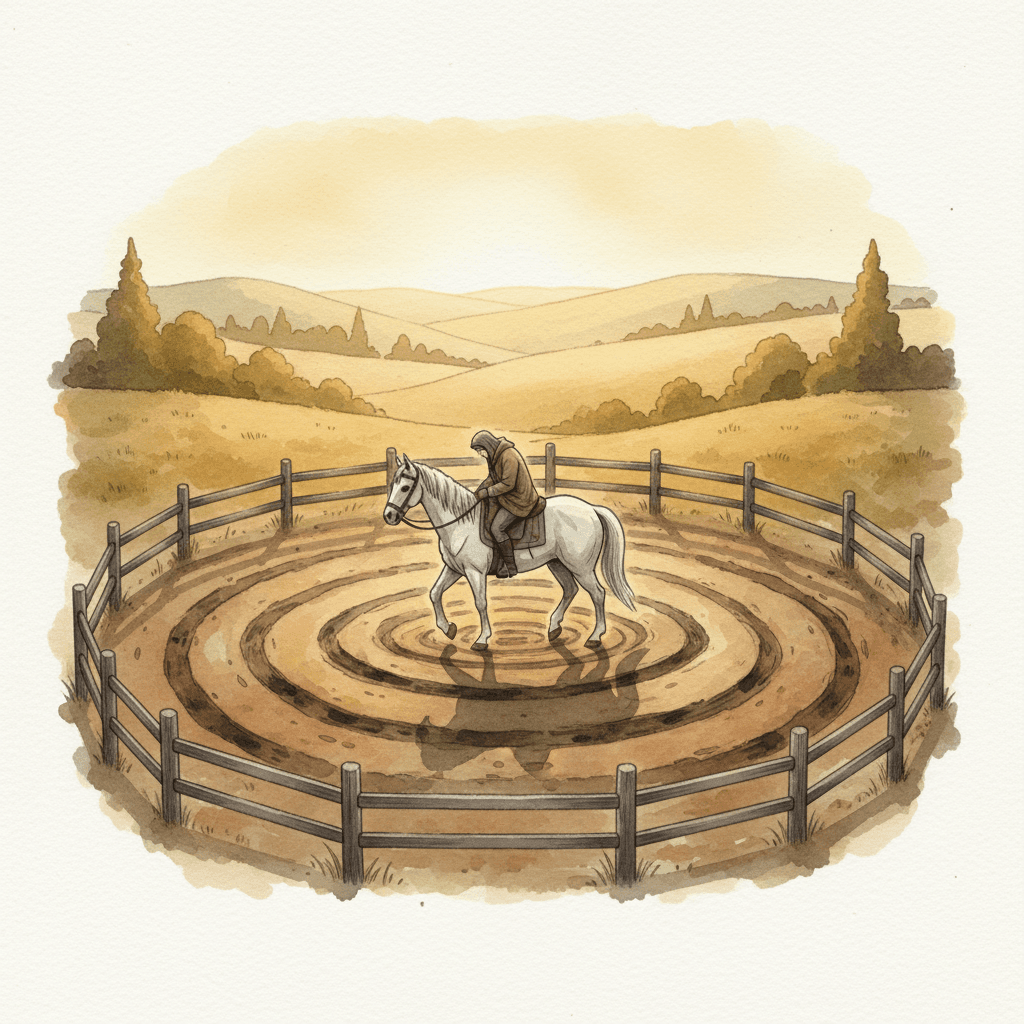
The more you ride Fear, the smaller his territory becomes. Each experience you avoid adds to an invisible map of places you have decided not to go. First it is one particular street. Then a neighborhood. Then leaving the house at all. Fear trots the same familiar loop, and over time that loop becomes the entire world. Predictability, even the predictability of limitation, begins to feel like safety. People call it being careful. They call it being realistic.
What distinguishes Fear from Anger is that Fear's prison builds quietly. There is no explosive gallop you can point to, no single dark valley you regret entering. Just a slow, nearly invisible contraction of what feels possible. One avoided experience at a time, the estate shrinks.
The Stoics understood this clearly. Seneca wrote that we suffer more in imagination than in reality. Most of what Fear maps as dangerous has never actually been tested. The stirrups keep you mounting before you find out.
Shame: The Quiet Retreat into Darkness
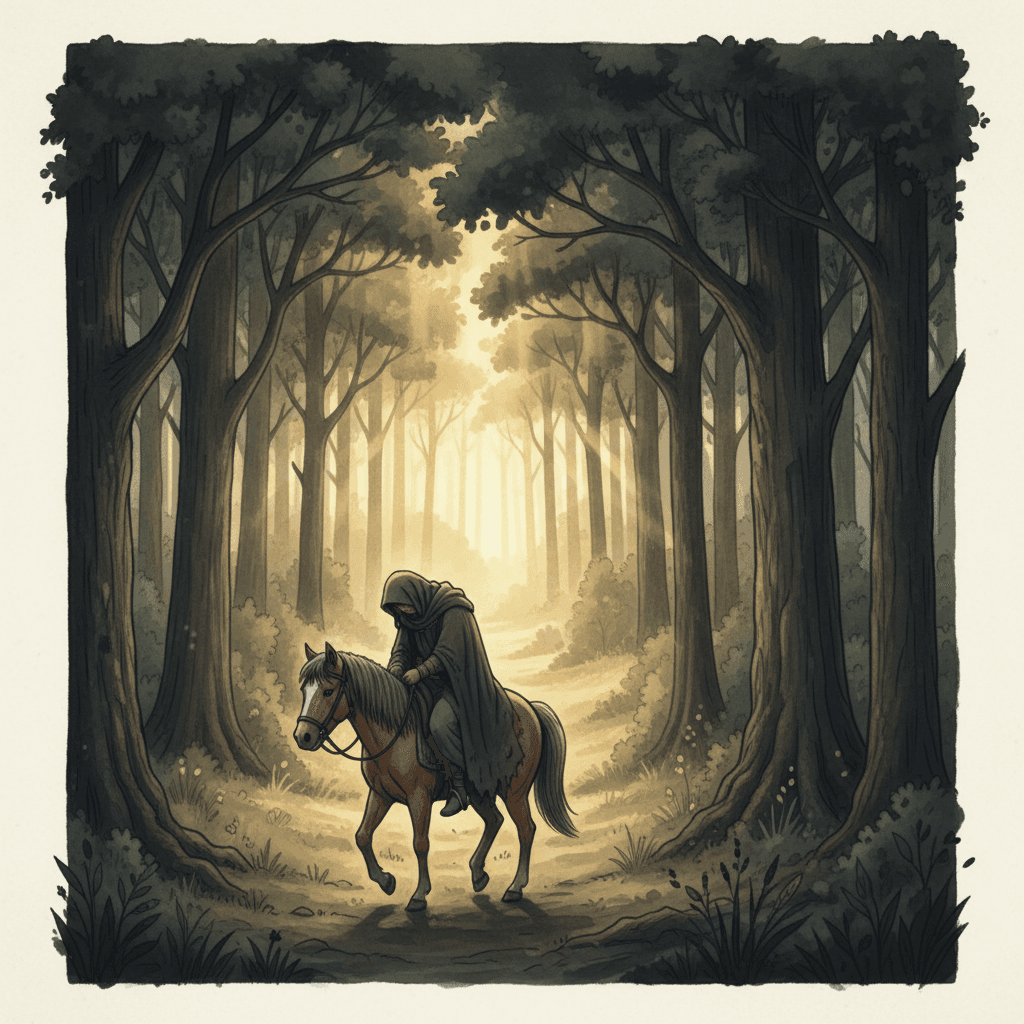
Shame is a small horse, easy to overlook. She has no dramatic stirrups. You barely notice when you have climbed on. There is no explosive moment, no sudden gallop. She simply moves inward and downward, toward the isolated corners of the estate where no one is watching.
From her back, you hear a consistent whisper: this is where you belong.
What makes Shame the most dangerous horse in the stable is not the ride itself, but what happens to your sense of self during it. With Anger, there is still a you who is angry. With Fear, there is still a you who is afraid. With Shame, the distinction begins to erode. It does not feel like a feeling. It feels like a fact. Not I feel shame, but I am shameful. The rider disappears into the horse.
This is why dismounting Shame feels, to so many people, structurally impossible. If the shame is not a temporary state but a revelation of permanent character, then what would it mean to get off? Who would you be without it? The question itself carries a strange gravity. People spend years, sometimes decades, hidden in those corners of the estate, genuinely convinced that stepping into the light would only confirm what Shame has been saying all along.
Carl Jung called this the shadow, the unexamined parts of the self we bury rather than integrate.
Letting Go: The Pathway of Surrender Shame is often the horse that carries those parts into hiding. The integration Jung pointed toward requires first acknowledging the horse exists, then recognizing you are the one riding her.
Anxiety: The Exhausting Ride to Nowhere
Anxiety is Fear's nervous cousin, but with an important difference. Fear responds to something that exists or once existed. Anxiety invents its threats.
She is high-strung and never fully settles. She startles at shadows, flinches at sounds that are not there, tenses before there is anything to tense against. She has no preferred direction. She circles. The body braces for impacts that never arrive, and by the end of the day the bracing itself is the source of collapse. You have been moving all day and gone nowhere.
This is the particular exhaustion of anxiety: not the depletion of effort but the depletion of anticipation. The shoulders permanently raised. The jaw permanently set. The low-grade vigilance humming underneath every ordinary moment.
People who ride Anxiety habitually often forget what stillness feels like. They mistake the constant motion for productivity, the constant alertness for intelligence, the constant preparation for wisdom. Unlike Fear, who teaches the nervous system what to specifically avoid, Anxiety teaches something broader and more corrosive: that everything might be dangerous. The threat horizon expands until it covers the whole sky.
Buddhist psychology has a useful framing here. Much of what we call suffering arises not from what is happening but from our resistance to not knowing what will happen. Anxiety is that resistance given a horse and a saddle.
Greed: The Horse That Never Arrives
Greed was built for scarcity emergencies. In a world where food and resources were genuinely uncertain, a strong drive toward accumulation was adaptive. Like the others, the design has not changed to match the world we now inhabit.
He is a fast horse, and he races toward destinations with impressive conviction. More money. More status. More certainty. More of whatever the nervous system has decided will finally be enough. The problem is that the moment you arrive, Greed has already identified the next destination. He points his nose toward the horizon before you have had a chance to look around at where you are.
There. That is what we really need.
People accumulate without enjoying. They achieve without resting. They reach without landing. The ride itself becomes the entire point because stopping feels, from Greed's back, indistinguishable from falling behind. Time goes. Relationships go. Health goes. Presence, especially, goes. All of it fed into the engine of the next arrival.
The insight that tends to interrupt this pattern is not moral but practical. You notice, eventually, that the satisfying arrival has never once been the last destination. Which means either the satisfaction is always one destination away, or the destinations were never the source of it to begin with.
The Neglected Ones
Toward the back of the stable stand horses that do not lean against the gate. They do not have emergency stirrups. They wait, quietly, to be chosen. And because they do not push to the front, they are often overlooked for days, then months, then years at a stretch.
Joy: The Forgotten Freedom
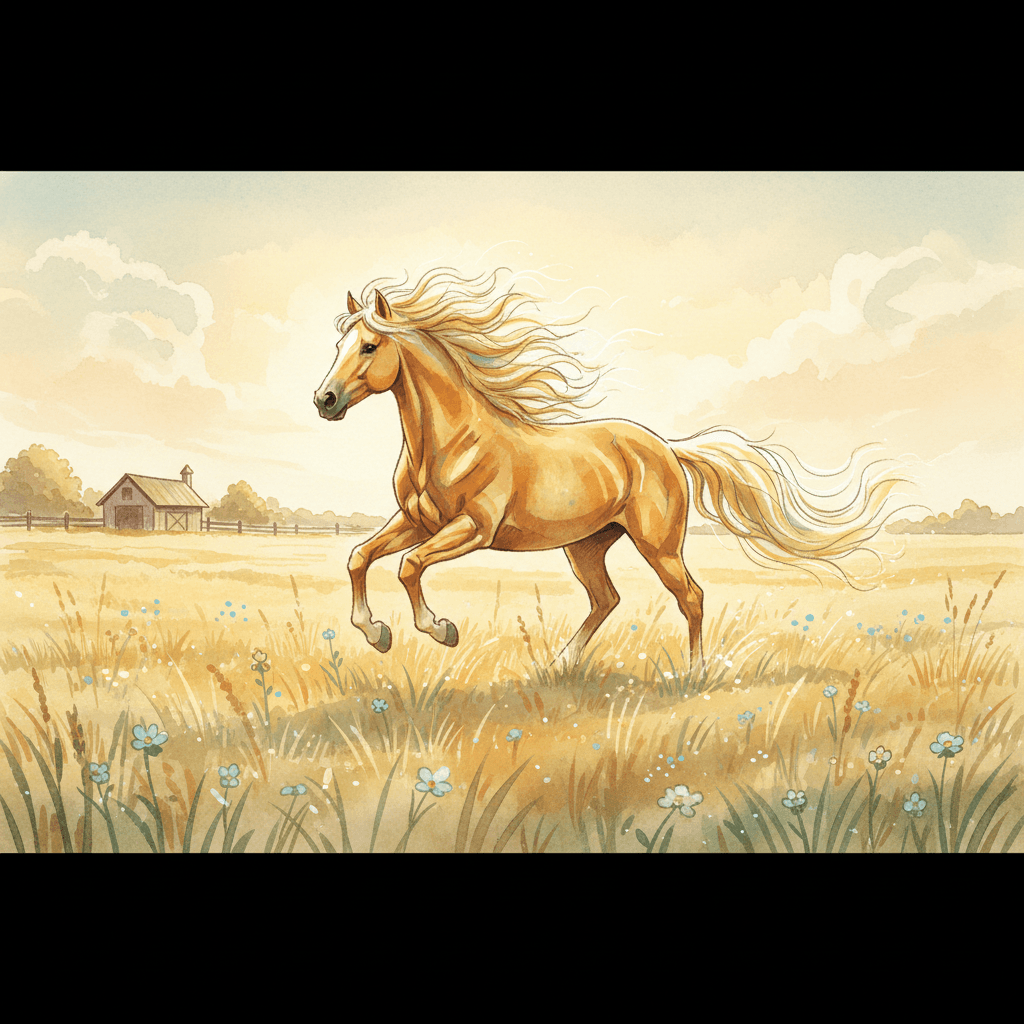
Joy is a spirited horse. She wants to gallop across open fields with no destination in mind, no threat to outrun, no prize at the finish. The ride itself is the point.
This is, it turns out, a hard thing to give yourself permission for.
Joy has no emergency stirrups because she requires a different kind of activation. She needs willingness. She needs space. She needs a genuine release of the feeling that you should be doing something useful instead. The horses at the front of the stable work hard to prevent exactly this. Fear insists that joy is irresponsible. Anxiety maintains that it is naive. Greed whispers that joy will come later, after you have finished what you are working toward.
So Joy stands unridden. And this is where a particular cruelty sets in: the longer she waits, the more unfamiliar the ride becomes. When you finally approach her after a long absence, the mounting feels strange. There is a stiffness in it, an awkwardness, as if your body has forgotten the posture required for this kind of movement.
Joy lives entirely in the present moment. She has no interest in past regrets or future destinations. She exists only in the actual texture of now, and the horses at the front of the stable are entirely oriented toward everything except now.
Without Joy, the other rides lose their meaning. You race on Greed toward goals that produce no satisfaction when you arrive. You rest, finally, and find you do not know how to inhabit the stillness. You have been so long in the emergency that peace feels wrong.
Joy does not need to be earned. She does not require a reason. She asks only for permission and room to run. And when you finally give her both, something returns that you did not realize had been missing. A sense that this, the actual texture of being alive, is what all the other horses were supposedly protecting.
Gratitude: The Vantage Point
Gratitude is a different kind of horse entirely. She does not race. She does not retreat. She does not circle.
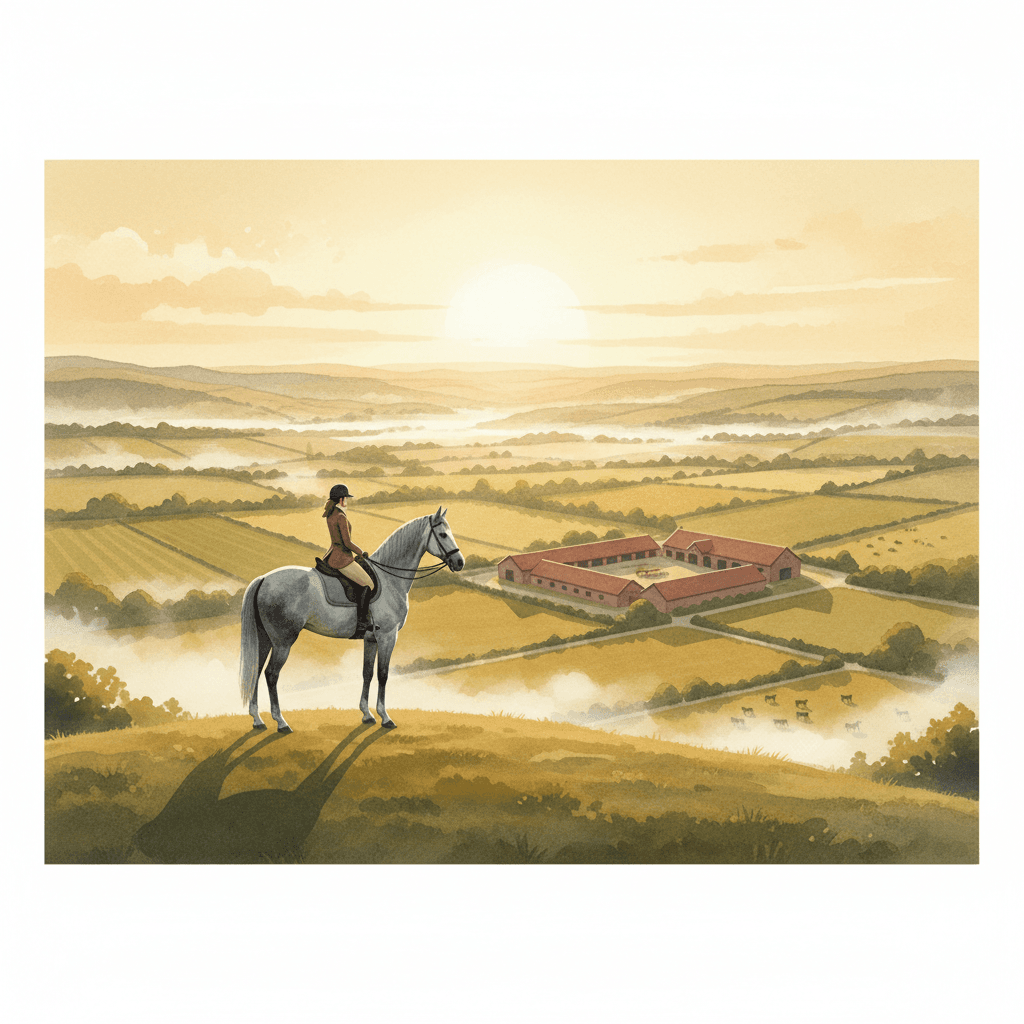
She stands still, solid and calm, and offers something none of the other horses can: perspective.
From her back, you can watch the whole stable from a distance. You can see Anger rearing at the gate without being on his back. You can see Anxiety circling without joining the orbit. You can watch Fear stamp his feet without following him down the familiar narrowing path. The ride is not about going anywhere. It is about seeing from a vantage point that the other horses never reach.
What Gratitude changes is not the situation but what you notice within it. What is working. What remains. What has not been swept away despite everything. This is not a denial of what is difficult. The problems do not disappear from the view. But the relationship to them shifts. They exist within a larger landscape rather than filling it entirely.
The challenge is that Gratitude has no emergency stirrups. She asks for a deliberate choice. And that choice is hardest precisely when it would be most useful. When Anger is rearing at the gate, when Fear is stamping, when everything feels like it is burning, the invitation to mount Gratitude instead reads almost like an insult. Be grateful? Now? With everything falling apart?
But that is exactly when the vantage point matters most.
Eckhart Tolle observed that most human suffering is not caused by what is happening but by the story the mind tells about what is happening. Gratitude does not change the events. It changes the narrator's relationship to them. People who ride Gratitude regularly find, over time, that the other horses become less imperious. Not because the horses changed. Because the rider has developed a reference point they can return to.
Perspective, it turns out, is a form of power.
A Brief Word on the Others
The neglected horses are more numerous than we typically acknowledge.
Love is a calm horse who asks for clear direction. She will go wherever you point her, but she does not run well on compulsion or fear. She works best when the rider is settled.
Empathy, like Gratitude, offers a vantage point. Not your own terrain, but the terrain of another person. The ride asks you to leave your own map behind for a time.
Curiosity shows new territory. She has no preference for where the riding ends up. She simply wants to keep going further in.
Wonder is perhaps the most forgotten horse in the stable. She sits very still, and most people walk past her without looking. From her back, the ordinary world reveals itself as genuinely strange and inexplicably beautiful. She has been there the entire time.
When you find yourself deep in a difficult ride, you can always whistle for a different horse. Compassion, Forgiveness, Understanding. They are always available, always willing. The question is whether you remember they are there.
The Critical Distinction: Rider and Horse
There is a pattern in the language we use for emotion that tells you almost everything about the relationship between consciousness and feeling.
Listen to how we talk.
I am angry. I am depressed. I am anxious. I am afraid.
Not: I am experiencing anger. Not: I notice fear arising. Just the collapsed equation, the subject and the state merged into a single identity. No separation. No space. No awareness that a choice was ever available. You do not say "I am experiencing anger." You say "I am angry," and in that construction the space between the rider and the horse disappears entirely. There is no rider. There is only the gallop.
This is what it means to become the horse. No observation, no vantage point from which to examine the feeling or decide whether you want to follow it where it is going. You are the emotion, and because you are the emotion, it speaks with your voice, acts with your hands, and justifies itself with your reasoning.
Most people spend entire lives moving from horse to horse in exactly this way. They ride Anger until it exhausts itself, fall into Shame, escape into Anxiety's circles, reach for Greed, and call the whole sequence their personality. "I'm just an angry person," as though Anger were a fixed feature of identity rather than one horse among many who keeps getting chosen.
Something different becomes possible when the space between rider and horse opens up.
An event occurs. Anger gathers at the gate, strong and urgent as always. The emergency stirrups are already fitted, already waiting. And this time, something notices. You feel the pull. You feel the power. And something in you says, quietly: I am experiencing anger.
Three words. Enormous difference.
You have not denied the anger. You have not suppressed it or pretended it is not there. Anger is real, and his power has not been diminished by the observation. But you have introduced something that was not there a moment ago: a small and essential gap between the feeling and the self. In that gap, choice appears. In that gap, the question becomes possible: do I want to ride this horse right now?
Sometimes the answer is yes. Anger has his place. There are situations where riding him is appropriate, even necessary. But now you are choosing consciously, steering deliberately, and you can notice where he is heading before you are already deep in the valley.
Other times the answer is different. Not this time. And you let Anger burn off his energy in the paddock while you turn toward a different horse entirely.
The Stoics built an entire philosophy around this gap. Marcus Aurelius returned to it constantly in his private journals: the distinction between what happens to us and how we respond. Not the event, but the interpretation of the event. Not the stimulus, but the space between stimulus and response. Viktor Frankl, writing from circumstances far darker than most of us will ever face, named this space as the one human freedom that cannot be taken away.
This is not a passive practice. It is not the absence of emotion or the cultivation of indifference. It is something more demanding: learning to feel fully while remaining the one who is feeling.
The Ego and the Great Forgetting
The ego is the rider.
It is not a villain. It is not something to be destroyed or transcended. It is the function of consciousness that gathers experience into a coherent self, that says "this is me" and "this is mine" and "this is my history." In ordinary terms, it is necessary and useful.
But the ego has a tendency toward a particular error. It looks at the horses and thinks: these are me.
It confuses the contents of consciousness with consciousness itself. It confuses the weather with the sky. It has been riding so long, and moving so quickly from horse to horse, that it forgot there was ever anything else. The horses feel like identity. The fear feels like character. The anger feels like self. And because the ego experiences itself as the horses rather than the rider, it defends them with surprising ferocity. To question whether you are your anger becomes, somehow, a threat to the self.
A New EarthJung called this identification with the unconscious, the state in which the inner figures we have not examined run our lives from the shadows. The horses we have never consciously chosen to ride are often the ones that have the most control.
But here is what I find genuinely interesting. There is something that watches even this. Something that can observe the ego's patterns, notice the identifications, witness the habitual mounting without being fully consumed by it. Consciousness itself. Awareness. The presence that is reading these words right now, sitting behind the thoughts about the words.
The moment awareness turns its attention to the ego's patterns, something shifts. Not dramatically. Not permanently. Just a small and real loosening of the grip. The ego begins to see itself from a slight distance. Not from the outside, exactly. More like a man who has been staring at a painting from two inches away taking a step back and seeing the whole canvas.
This does not destroy the ego. It does not eliminate the horses or make them smaller or calm. What it does is restore the rider to their actual role. Not to be the horses, but to ride them. Not to be consumed by the feelings, but to feel them, fully and without flinching, from a place that is not itself the feeling.
Eckhart Tolle wrote that awareness is the greatest agent for change.
The Power of Now Not willpower. Not self-discipline in the usual sense. Not forcing yourself to feel differently. Just awareness, clear and steady, turned toward what is actually happening inside.
This is learnable. That deserves repeating, because it can sound like something reserved for mystics or the naturally serene. Awareness is a skill, not a gift. Every time you catch yourself mid-gallop and notice, even one second too late, that you are already on Anger or deep in Anxiety's circles, you are building the muscle. The gap between trigger and response grows, slowly, with use. It grows the same way any other capacity grows: through practice, through repetition, through the slow accumulation of moments where you noticed.
Closing: A Question Worth Sitting With
I do not want to end this by telling you what to do with it.
The horse metaphor is not a self-improvement system. It is not a technique for managing emotions more efficiently. It is an invitation to a different way of looking at something you have been looking at your entire life.
You have been feeling things for as long as you can remember. You have been identified with those feelings for nearly as long. The Anger you have carried since childhood. The Fear that maps certain territories as forbidden. The Anxiety that hums underneath productive days. The Shame that retreats to its corner whenever the light gets too direct. These feel like you because you have been riding them for decades without noticing the saddle.
What would it mean to notice the saddle?
Not to get off immediately. Not to pretend the horses are not strong and fast and sometimes genuinely overwhelming. But to know, even in the hardest moments, that there is a you that is distinct from the gallop. A rider, even if the rider has been asleep for a long time.
The Joy you have not ridden in years. The Gratitude whose vantage point you have barely visited. The Wonder standing quietly at the back of the stable, waiting without complaint, ready to show you something that was always there.
What if the emotions you think of as who you are are actually just horses you forgot you mounted? And what would change, even slightly, if you remembered that you could dismount?
I do not know your stable. I do not know which horses have been running your days. But I suspect you know. And I suspect, somewhere underneath the familiar gallop, part of you has been waiting for this question.
The rider is still there. They have always been there. They are the one reading this right now.
Want the visual guide? Five horses. Five patterns. One page each. Free.
Free Download
The Stable of Emotions: A Visual Guide
Five horses. Five patterns. One page each. A framework for seeing the emotions that run your days.
Comments
Stay Curious
New essays on consciousness, perception, and the questions worth sitting with. Delivered to your inbox when they are ready.