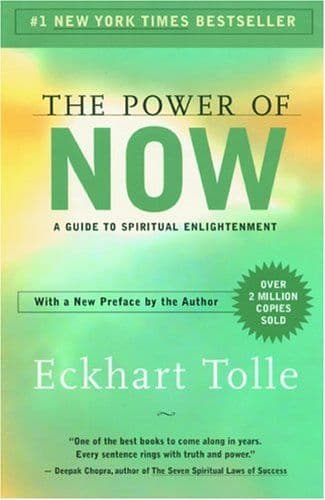
The Power of Now: A Guide to Spiritual Enlightenment
Synopsis
The Power of Now is Eckhart Tolle's guide to transcending ego-based consciousness by anchoring awareness in the present moment. Tolle argues that psychological suffering stems from identification with the mind's constant stream of thoughts, particularly those fixated on past regrets or future anxieties. By recognizing yourself as the awareness observing thoughts rather than the thoughts themselves, you can access a dimension of consciousness beyond the thinking mind. The book distinguishes between clock time, which is practical and necessary, and psychological time, which creates suffering by pulling attention away from the only moment that actually exists: now. Tolle draws on traditions including Buddhism, Advaita Vedanta, and Christian mysticism, translating ancient teachings into accessible language for contemporary readers. The format blends explanation with practical guidance, offering techniques for disidentifying from compulsive thinking and resting in present-moment awareness. It's direct and repetitive by design, returning to core insights from multiple angles to help them penetrate beyond intellectual understanding.
Philosophical Vectors
Personal Synthesis
"The Power of Now shifted something fundamental in how I relate to my own mind. Tolle's core insight sounds almost too simple: most suffering comes from being anywhere but here. We're lost in thought about past events that no longer exist or future scenarios that haven't happened, missing the only moment we actually have. What made this click for me was the distinction between being aware of thoughts and being lost in them. I'd never questioned my identification with the voice in my head. Tolle points out that if you can observe your thoughts, you can't be your thoughts. That gap between awareness and thinking is where presence lives, and recognizing it changed my relationship to anxiety entirely. The concept of the pain-body was particularly illuminating. Tolle describes how accumulated emotional pain develops a kind of entity that feeds on drama and negativity, perpetuating itself across situations that trigger it. Once I started noticing this pattern, I could see it operating in myself and others with uncomfortable clarity. The recognition itself begins to dissolve its power. Tolle doesn't romanticize presence or promise constant bliss. He's clear that you'll still experience pain, challenges, and practical problems. The difference is meeting them without the additional layer of mental resistance that transforms pain into suffering. Accepting what is doesn't mean passivity. It means responding from clarity rather than compulsive reactivity. The book is deliberately repetitive, circling the same territory from different angles. At times I found that frustrating, but I came to see it as intentional. These aren't concepts to understand intellectually. They're pointers toward a shift in consciousness that happens through direct recognition rather than analysis. Some sections feel abstract, particularly when Tolle discusses Being or the Unmanifested. But the practical guidance, watching the breath, observing thoughts without judgment, finding the inner body, is immediately applicable. These aren't complex practices requiring years of training. They're simple redirections of attention that anyone can try right now. The Power of Now hasn't solved everything, but it's given me a way to work with my mind that actually functions. When I remember to come back to presence, which is still inconsistent, there's a quality of peace that doesn't depend on circumstances being a particular way. That alone makes it one of the most valuable books I've encountered."