The Holographic Universe
Synopsis
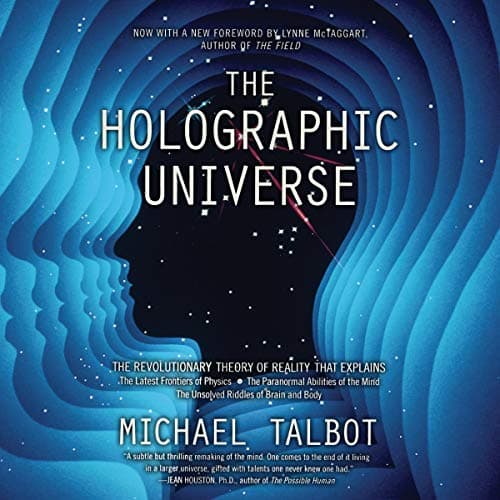
The Holographic Universe presents Michael Talbot's exploration of the idea that reality operates on holographic principles, where every part contains information about the whole. Drawing on the work of physicists David Bohm and Karl Pribram, Talbot argues that the universe and consciousness itself function like holograms, with implications that blur the boundaries between mind and matter, past and future, individual and collective. He weaves together quantum physics, neuroscience, mystical experiences, psychic phenomena, and spontaneous healings to suggest that what we perceive as solid reality is actually a projection from a deeper, interconnected dimension. The book moves fluidly between hard science and phenomena typically dismissed by mainstream academia, treating shamanic journeys and particle physics as equally valid windows into how reality works. It's ambitious and wide-ranging, asking readers to reconsider fundamental assumptions about the nature of existence.
Philosophical Vectors
Personal Synthesis
"The Holographic Universe opened doors I didn't know existed. Talbot takes the holographic model, originally a fringe idea in physics, and extends it into territories most scientists won't touch. What makes it compelling is that he grounds the discussion in actual physics, particularly Bohm's implicate order and Pribram's holographic brain theory, then shows how this framework might explain phenomena that materialism can't account for. The range is staggering. Talbot examines psychic abilities, near-death experiences, spontaneous healings, and shamanic practices, all through the lens of holographic principles. Some of it felt speculative, but he's transparent about where the science ends and the implications begin. He takes reported experiences seriously rather than dismissing them because they don't fit the current paradigm. The central insight is profound: if reality is holographic, then consciousness and matter aren't separate, time isn't linear, and everything is interconnected at a fundamental level. These aren't just philosophical musings but have practical implications for understanding healing, intuition, and the plasticity of physical reality. The book can feel scattered, jumping between topics without always tying them together tightly. But that's the nature of mapping territory most people don't acknowledge exists. Not everything landed for me, but enough did that it fundamentally shifted how I think about consciousness and the limits of materialism."