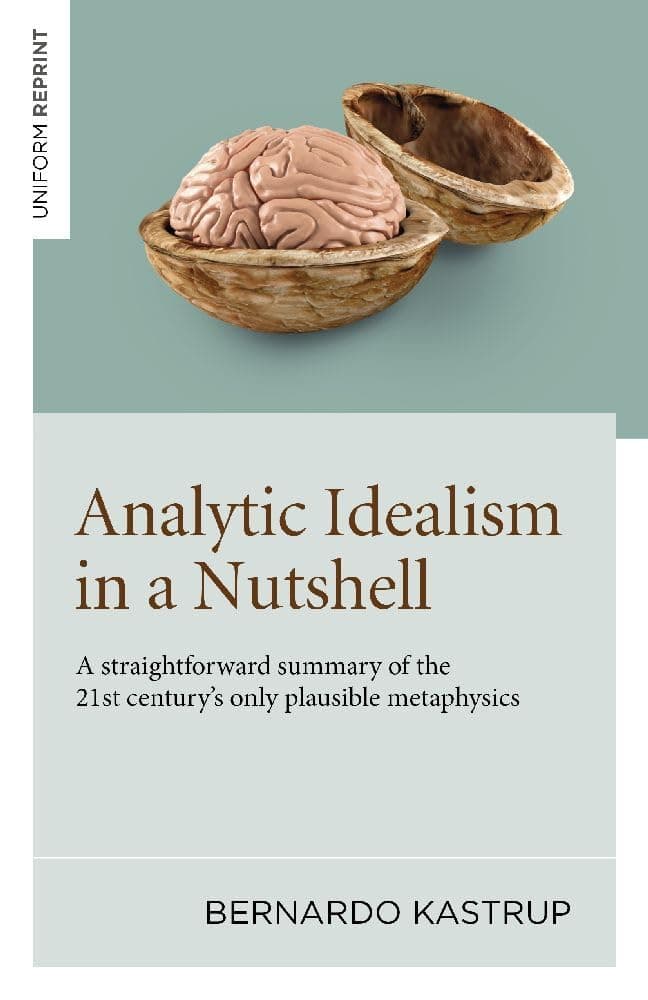
Analytic Idealism in a Nutshell
Synopsis
Description: Analytic Idealism in a Nutshell is Bernardo Kastrup's concise argument for why consciousness, not matter, is the fundamental nature of reality. Unlike materialist frameworks that struggle to explain how subjective experience arises from physical processes, Kastrup proposes that mind is primary and matter is what consciousness looks like from the outside. He approaches idealism through analytic philosophy rather than mysticism, building a rigorous case that our individual minds are dissociated aspects of a universal consciousness, much like alters in dissociative identity disorder. The framework addresses longstanding problems in philosophy of mind, particularly the hard problem of consciousness and the combination problem, while remaining grounded in empirical observations from neuroscience and physics. Kastrup writes clearly and systematically, anticipating objections and offering rebuttals. It's a short book but philosophically dense, requiring careful reading and a willingness to question deeply embedded assumptions about the relationship between mind and world.
Philosophical Vectors
Personal Synthesis
"Analytic Idealism in a Nutshell made me rethink everything I thought I knew about consciousness and reality. Kastrup's argument is deceptively simple: if consciousness is the one thing we know exists with absolute certainty, why do we assume it emerges from unconscious matter rather than being fundamental itself? What sets this apart from other consciousness books is the philosophical rigor. Kastrup isn't offering feel-good spirituality. He's systematically dismantling physicalism and building a coherent alternative using analytic philosophy. The dissociation model was the breakthrough for me. Individual minds aren't separate from universal consciousness. We're localized perspectives within it, like alters partitioned from a larger whole. That explains both our sense of separation and the underlying unity mystics report. The elegance of the framework is striking. It solves the hard problem of consciousness by not having one. It addresses the combination problem without requiring tiny particles to somehow aggregate into awareness. And it aligns with what physics tells us about the nature of matter dissolving into patterns of excitation when you look closely enough. Kastrup doesn't shy away from the implications. If idealism is true, death isn't annihilation but a dissolution of the dissociative boundary. Physical reality isn't an illusion but the extrinsic appearance of mental processes. These aren't comforting platitudes. They're logical conclusions from the premises he establishes. The book demands focus. Kastrup packs rigorous argumentation into a compact format, and some sections require rereading. But the clarity of his thinking rewards the effort. This is the most philosophically sound case for idealism I've encountered, and it's shifted my understanding of what consciousness is and what it means to exist."