There is a moment, usually after the fact, when you look back at something you said or did and ask: who was that?
You were there. Your face, your voice. But some quality of you, some cooler, quieter witness, was not quite present for the ride. The thing ran its course, deposited you somewhere unfamiliar, and by the time you arrived, the damage was done or the moment was gone.
I have spent a long time trying to understand what happens in those moments. The best image I have found is not a scientific one. It is older than that.
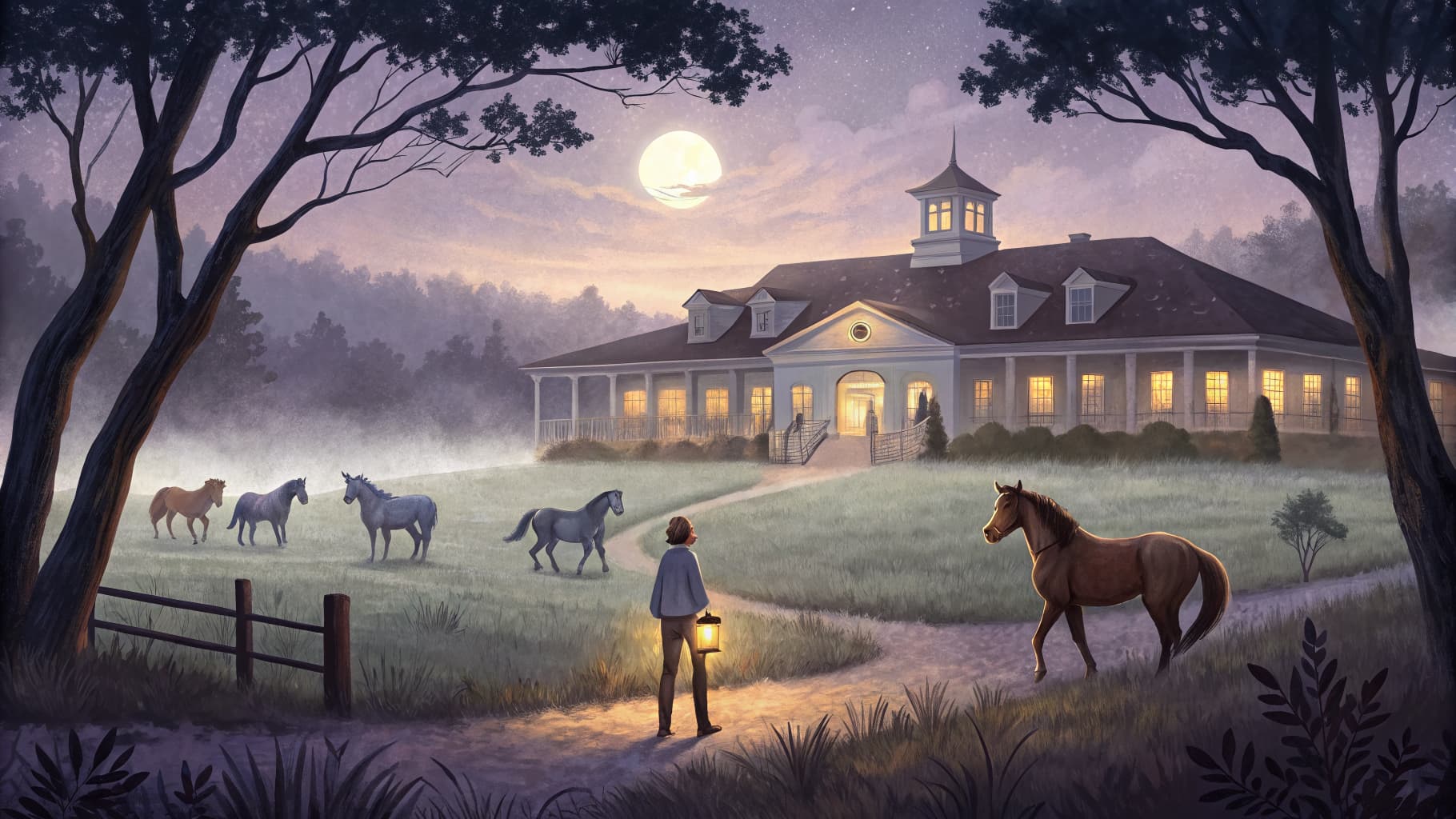
Imagine a stable. It sits at the center of a large estate, and it is yours. The estate, the land, all of it belongs to you, the quiet owner. But inside the stable are horses, each with a distinct temperament, each with a set of reins, each eager to carry you somewhere the moment you climb on. Some you mount willingly. Some you find yourself riding before you ever made a decision.
The horses are not evil. They are not mistakes of nature. Each one was bred for a purpose. But they do not know the whole estate. They know only their own routes. And the estate, left to its horses, becomes a very small place.
The Stallion in the First Stall: Anger
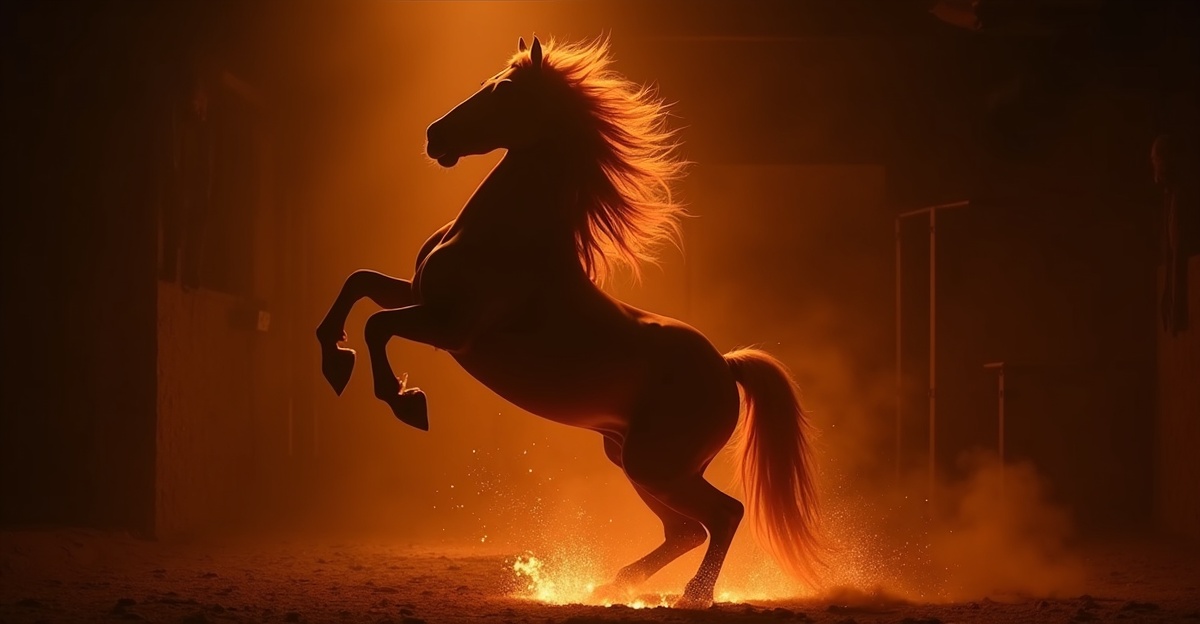
Anger is the most powerful animal in the stable. He is built for emergencies, which is exactly the problem. His utility is real. In a genuine crisis, in a moment where action is required now, he is extraordinary. He can cover ground faster than anything else you own.
But he comes equipped with emergency stirrups. The moment a certain kind of signal reaches the stable, he lowers them, and the pressure to mount becomes almost physical. The Stoic philosophers understood this. Marcus Aurelius wrote about the gap between stimulus and response as the space where character lives. But Anger makes that gap feel like a fraction of a second, because evolutionarily, it often was. The threat appeared, the body mobilized, and the one who paused to deliberate did not survive.
The trouble is that modern threats are rarely the kind that require an immediate charge. The email, the dismissive comment, the tone of voice in a meeting. These are not predators. But the stallion cannot tell the difference. His emergency stirrups drop for all of it.
By the time you notice you are riding, you are already into the dark valley. The gallop is explosive. The regret arrives quietly, at the other end. And the entire cycle, trigger to mount to valley to dismount, can complete in under a minute.
The horse is not the problem. The automatic mounting is.
The Second Stall: Fear, the Protector Who Became a Warden
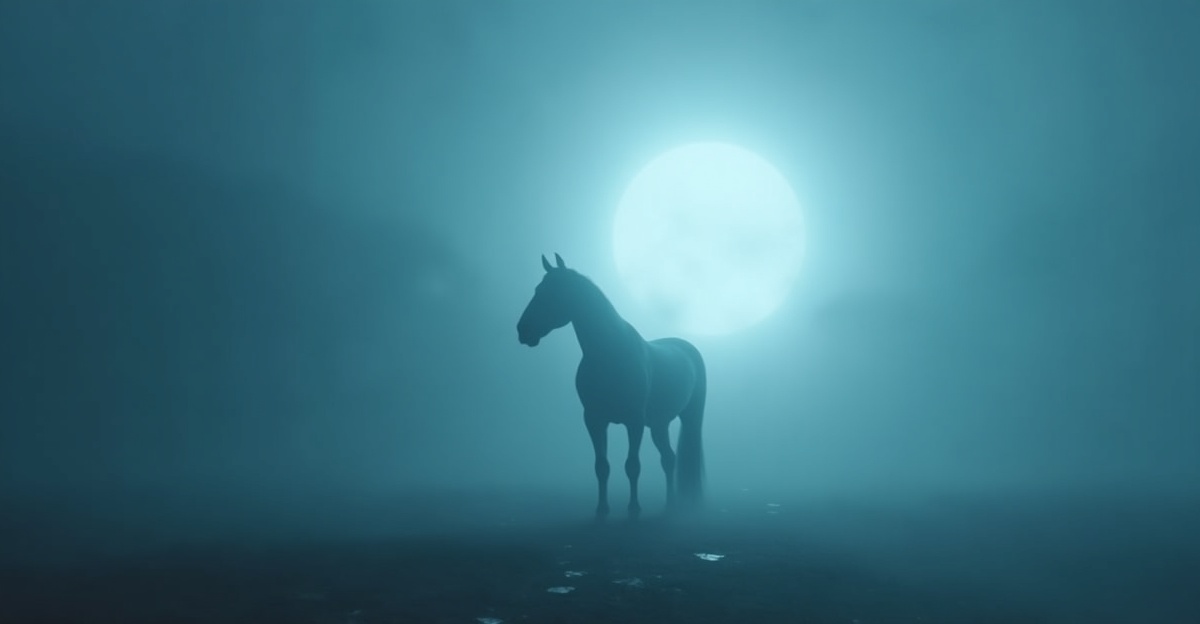
Fear is older than language. He kept your ancestors alive, kept them away from cliff edges and unfamiliar sounds at night. His instincts are not wrong. They are simply calibrated for a world that no longer quite exists.
Fear trots a predictable loop. He does not race to a destination; he navigates away from perceived threats. And here is where his design turns against the one who rides him habitually: the more you follow his routes, the more routes he adds to the list of places you do not go.
A boundary that begins as reasonable caution becomes, over time, a perimeter. The territory shrinks. Not through any single dramatic decision, but through accumulated small ones. The conversation not started. The trip not taken. The thing that used to feel interesting beginning to feel dangerous.
People riding Fear habitually tend to describe this through rational language. They are "being careful." They are "being realistic." The horse agrees. He always agrees. He has very good reasons for every loop he trots.
Carl Jung observed that what we deny does not disappear. It goes underground and grows. The fears we never examine do not become smaller through avoidance. They become the walls of a room we are living in and have stopped questioning. The predictability starts to feel like comfort. That is the deepest hook Fear has. He offers safety, and safety, when it is the only thing you are optimizing for, is just a smaller life.
The Third Stall: Shame, the Horse That Takes You Inward
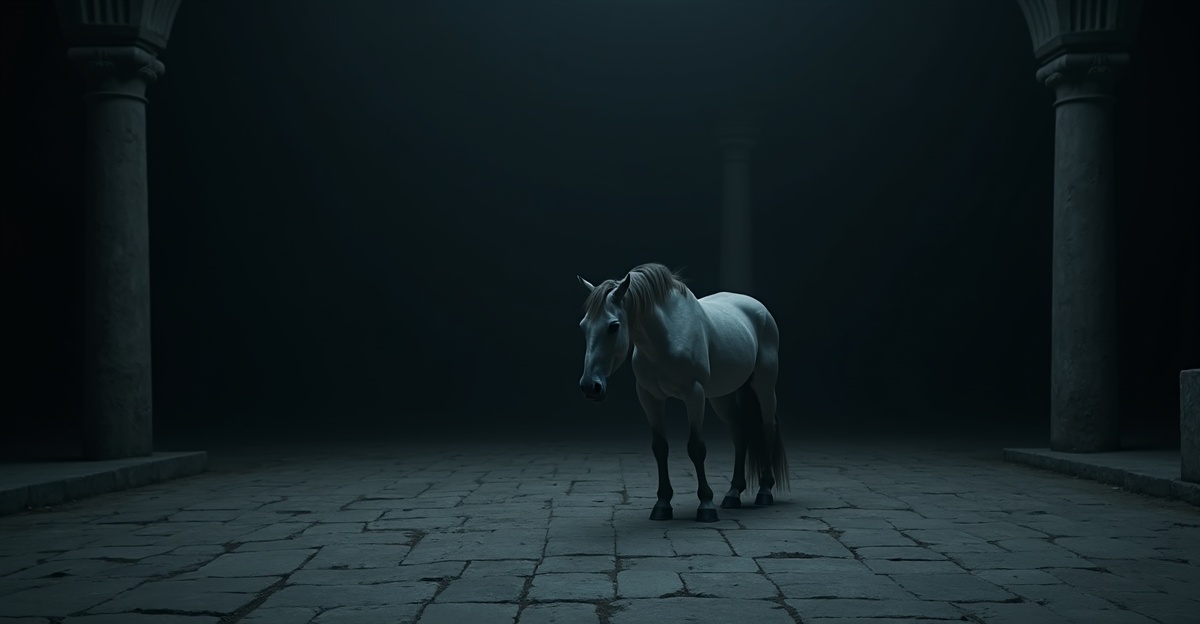
Shame is easy to miss. He is small, unassuming, not dramatic in the way of the stallion. He does not charge. He retreats.
He carries you inward and downward, to isolated corners of the estate you would not choose to visit. His whisper is quiet and specific: this is where you belong. The corner. The shadow. Here, away from others, where the mess of you can be properly contained.
What makes Shame the most dangerous horse in the stable is what he does to identity. The other horses take you somewhere. Shame convinces you that where he takes you is what you are. Not "I am riding Shame right now." But "I am a shameful person." The ride becomes a residence. The temporary state becomes a permanent address.
Buddhist psychology speaks to this with unusual precision. The practice of non-identification, of recognizing mental states as passing weather rather than fixed truth, is difficult precisely because Shame mimics identity so convincingly. The voice sounds like your own. The judgment feels like memory rather than interpretation. Dismounting feels not like a choice but like a lie.
Jung's concept of the shadow is useful here too. The parts of ourselves we refuse to look at do not vanish from the estate. They simply stop being examined. Shame often guards those rooms. It is not an accident. Shame has an interest in keeping you away from what is behind the door, because looking would mean accepting, and accepting would mean integration, and integration would be the end of his usefulness.
The Fourth Stall: Anxiety, the Endless Circuit
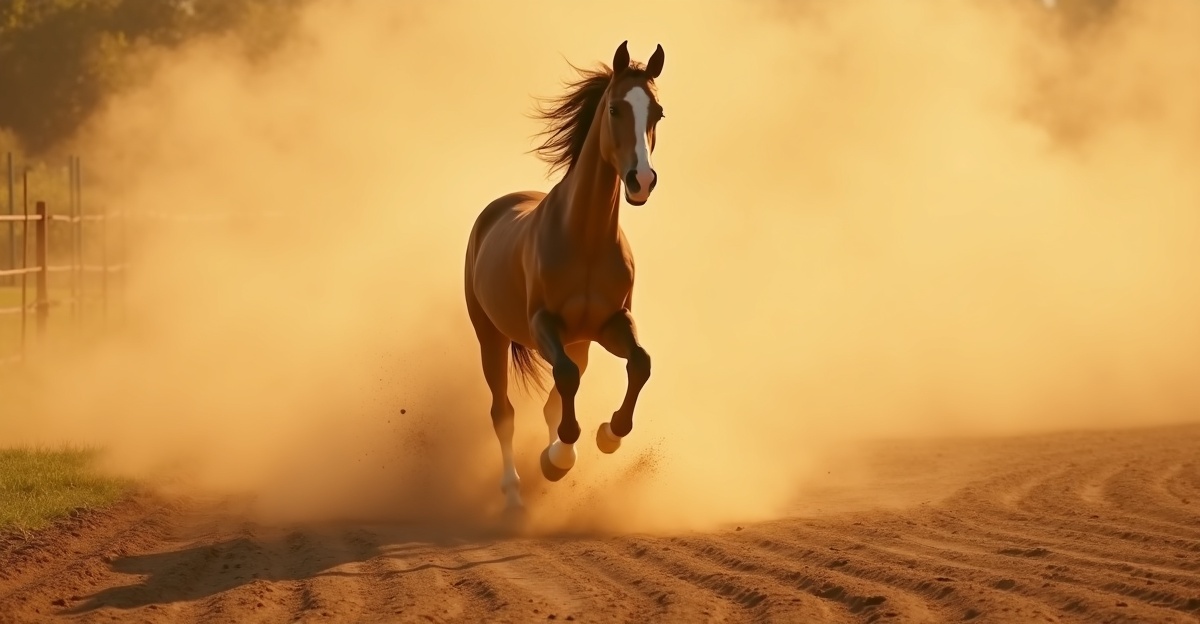
Fear's nervous cousin is harder to pin down because he has no particular destination. He is high-strung, fine-boned, perpetually alert. He does not gallop. He circles.
The worrying itself is the riding. Anxiety does not take you toward a threat or away from one. He runs a circuit of hypothetical territory, mapping worst-case scenarios that keep shifting the moment you approach them. There is always another corner to check. The circuit has no terminal point.
Eckhart Tolle points to this with the concept of the pain body.
A New Earth: Awakening to Your Life's Purpose The accumulated habit of mental suffering that sustains itself through your attention. Anxiety is one of the more common forms. The exhaustion is, in a strange way, the product. After a long enough ride, stillness becomes unfamiliar. The absence of circling anxiety starts to feel like a warning sign, like the quiet before something bad. Some people ride this horse so habitually that they cannot identify when they are on it. Their shoulders are permanently raised. Their jaw is permanently clenched. They call it being productive, or thorough, or vigilant.
The horse, for his part, never lands. That is the nature of the animal. He was built to scan for threats in a world where threats were sometimes real. In a world where threats are mostly constructed from projection and imagination, he becomes a machine for manufacturing suffering from nothing.
The Fifth Stall: Greed, the Horse That Never Arrives
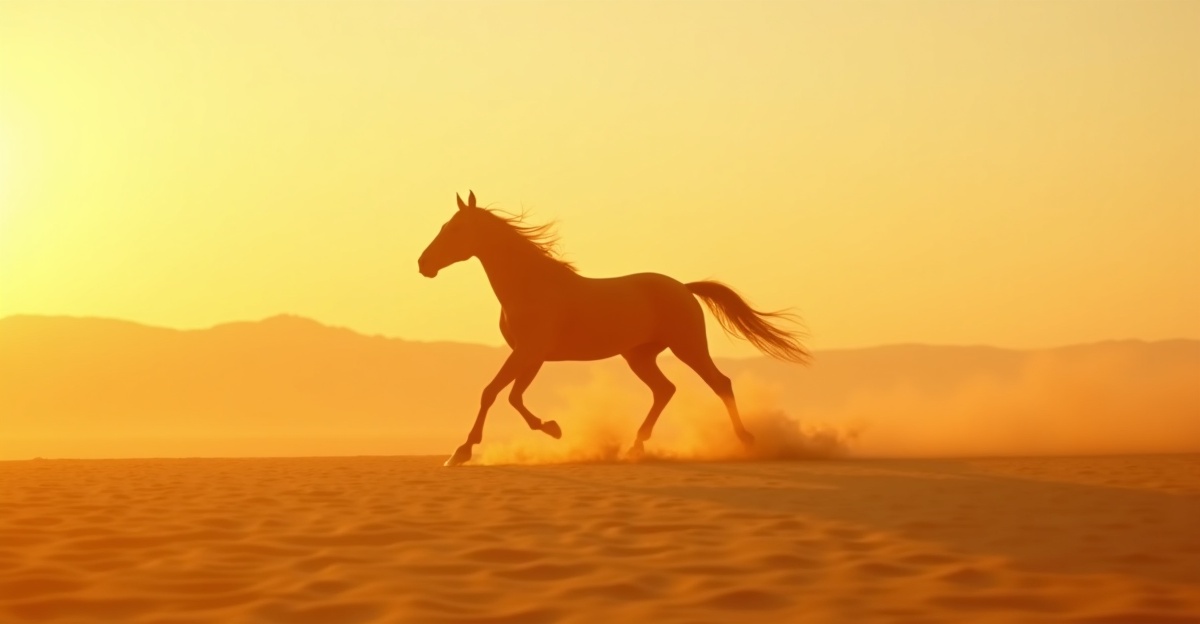
Greed is built for scarcity. He is designed for a world where resources are genuinely limited, where the one who moves fastest toward food or safety or advantage survives. His instincts made sense in that world.
In a world of relative abundance, he is perpetually misfiring.
He races from destination to destination, and the thing about riding Greed is that the arrival is always a false one. The moment you reach the thing you were racing toward, he has already spotted the next one. The accumulating happens. The enjoying does not. People acquire more while feeling less. The horse was never interested in the destination. He is interested in the chase, which is the only mode he knows.
There is a peculiar exhaustion that comes from riding Greed over a long period. You end up with more and feel less satisfied, which produces a feedback loop: the gap between having and feeling must mean you do not have enough yet. So the chase continues. The scarcity feeling, which was the original condition the horse was designed for, never actually resolves. He runs you toward solutions to a problem that the riding itself sustains.
The Sixth Stall: Joy, the Horse That Runs Without Reins
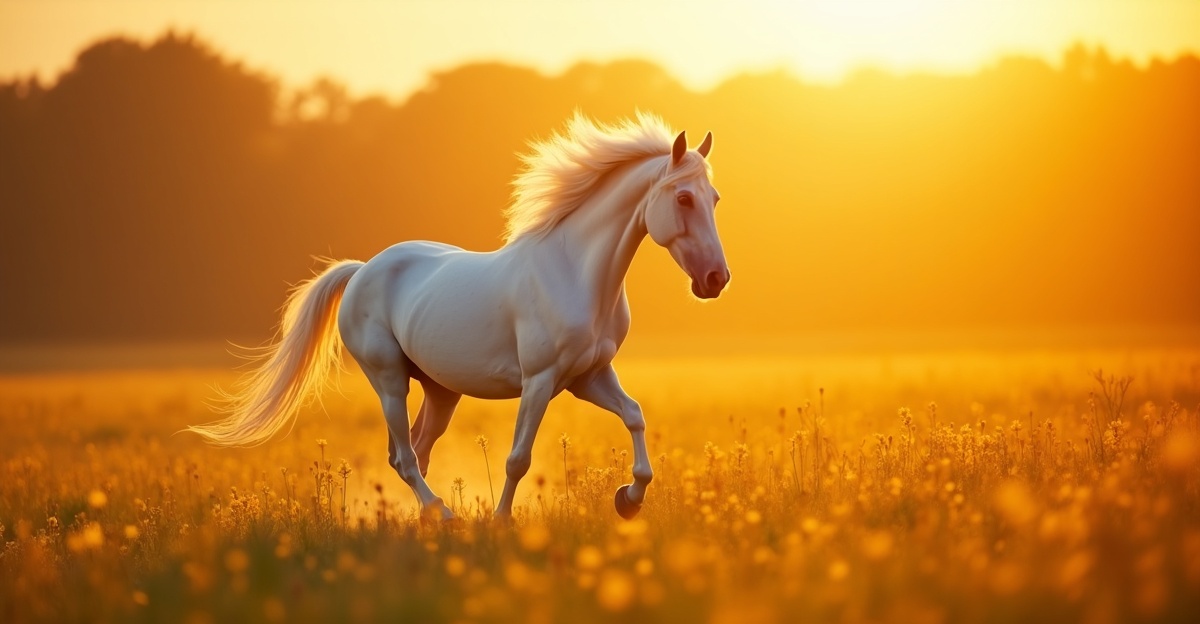
Joy is the horse nobody suspects. He is beautiful, fast, radiant. When he runs, the whole estate feels alive. And because his presence feels so good, so unmistakably right, it rarely occurs to anyone to examine the ride.
But Joy has a quality that makes him tricky. He is not sustainable at full gallop. He was designed for moments, not marathons. The burst of connection. The flash of creation landing. The first sip, the first morning, the first time something works. He is built for peaks, and peaks by definition do not last.
The trouble begins when you try to keep him running. You chase the conditions that produced him. You engineer situations. You avoid anything that might break the streak. And slowly, without meaning to, you begin to organize your life around sustaining a feeling that was never meant to be sustained. The pursuit of joy becomes its own quiet form of avoidance. If I can stay on this horse, I do not have to face what is waiting in the other stalls.
Carl Jung understood this. He did not rank emotions into good and bad. He ranked them into conscious and unconscious. Joy ridden consciously is one of the most clarifying experiences available to a human being. Joy ridden unconsciously, joy used as insulation from everything that is not joy, becomes a way of shrinking the estate down to a single sunlit path while everything else grows over.
The horse is not the problem. The refusal to dismount when the run is over is the problem.
The Seventh Stall: Gratitude, the Horse That Stands Still
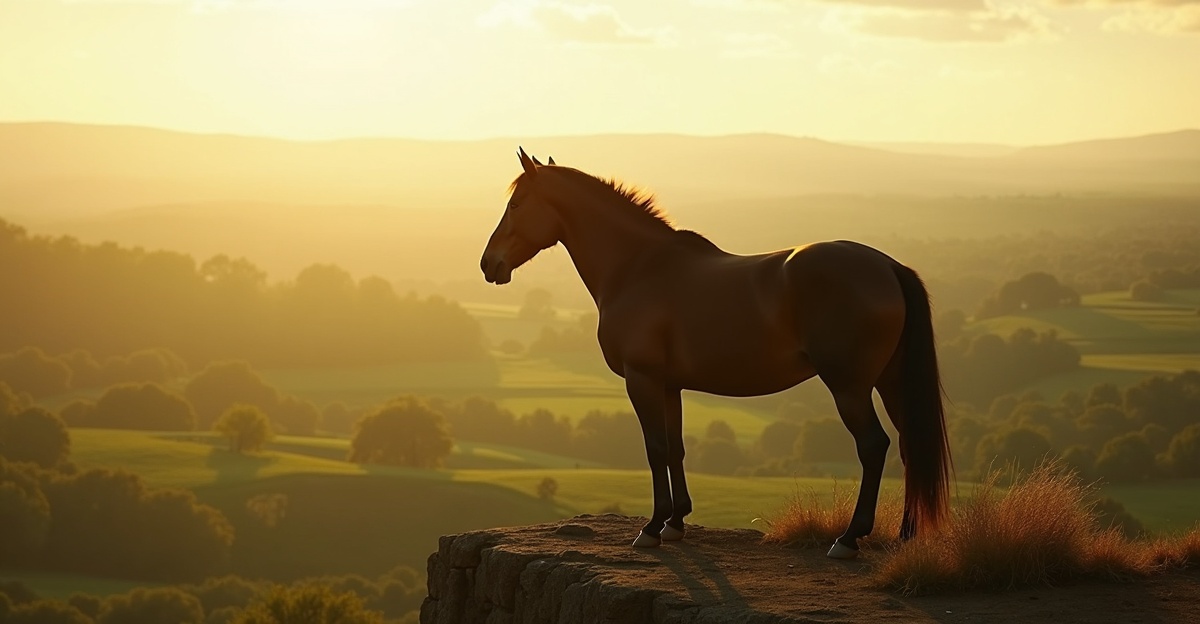
Gratitude is the quietest animal in the stable. He does not rear. He does not pace. He does not gallop toward anything or away from anything. He simply stands, and in his stillness, something unusual happens. The estate looks different.
Not because anything changed. Because the rider stopped moving long enough to see what was already there.
This is why every contemplative tradition, across every culture and century, returns to gratitude as a foundational practice. Not because it is a pleasant emotion, though it can be. Because it is the one state of awareness that does not distort the landscape. Every other horse takes you somewhere, and in doing so, narrows your view to the path ahead. Gratitude does not take you anywhere. It widens the view from wherever you are standing.
Buddhist psychology calls this quality of attention "bare awareness." The Stoics called it the discipline of assent, choosing to affirm what is before reaching for what could be. Tolle speaks of presence as the doorway. These are different traditions pointing at the same horse.
But gratitude is not passive. Standing still in the stable takes more discipline than running. The other horses are loud. They have urgency. They have momentum. Gratitude asks you to stay when everything else is pulling you to ride. That is not weakness. That is the most demanding form of attention the estate requires.
The horse that stands still is the one that lets you see the whole estate at once.
The Dismount
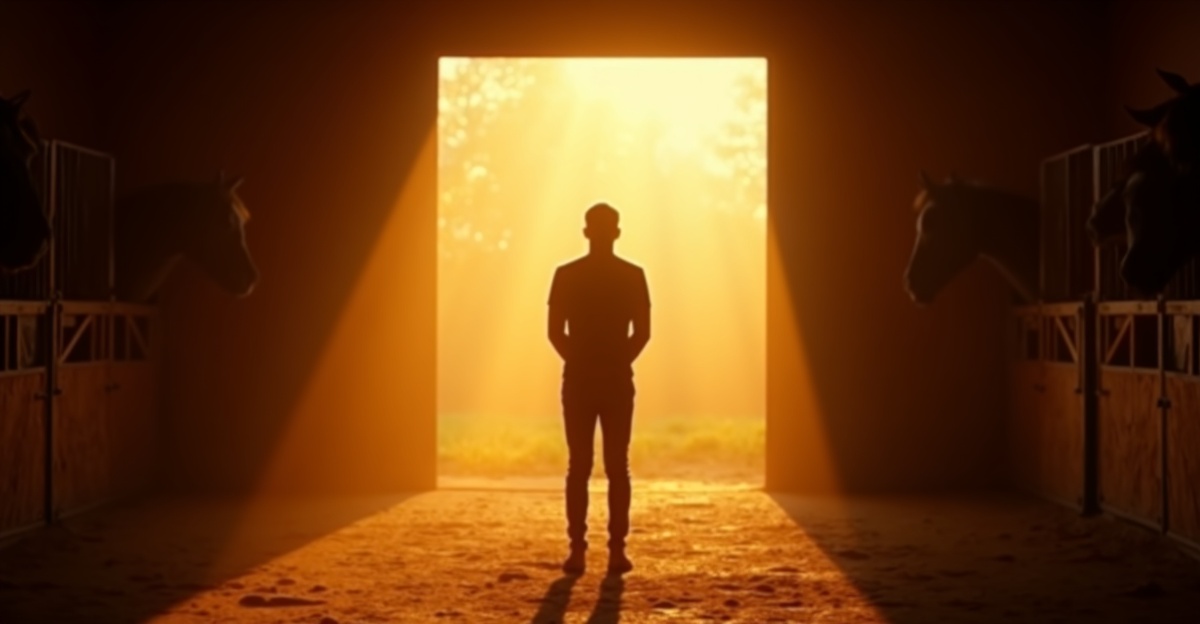
None of these horses are villains. I want to be clear about that. Anger kept your ancestors from being killed. Fear kept them from the cliff edge. Shame regulated behavior in social groups where exclusion meant death. Anxiety kept the watch. Greed built reserves against winter. Joy marked the moments worth returning to. Gratitude held the ground when everything else was in motion.
They are not broken. They are simply not lords of the estate.
Eckhart Tolle writes that awareness is the greatest agent for change. Not willpower. Not analysis. Awareness. The moment of recognition itself, the moment of noticing you are on a horse, is the beginning of the dismount. You do not have to wrestle the horse to the ground. You do not have to eliminate the emotion. You do not have to pretend it is not there.
You simply have to notice that you are riding.
This is what the Stoics were after. Not the absence of emotion, which is neither possible nor desirable, but the sliver of space between what happens and how you respond. That space is where choice lives. Tiny as it sometimes is, the space is real. It can be widened through practice, through the slow development of a habit of watching. The observer who notices is not the horse. The observer is you, the quiet owner, standing in the doorway of the stable.
The horses do not disappear when you are present. They remain exactly where they are, ready to be useful when the moment genuinely calls for them. The stallion may well be needed someday. The guardian serves real purposes. But they are not the lord of the estate. They do not get to decide the direction without your awareness.
A Question Worth Sitting With
I am not offering a system here. There is no protocol for this. What I am pointing to is a quality of attention that most of us were never taught to cultivate because no one pointed out that we needed it.
The emotions you experience as most fundamentally you, the ones that feel like character rather than weather, the anger that feels like honesty, the fear that feels like wisdom, the anxiety that feels like responsibility. What if some of those are simply horses you mounted so long ago that you forgot the mounting happened?
Not a rhetorical question. A real one.
Because if you can remember that you mounted, you can also remember that you can dismount. Not escape. Not suppress. Dismount. Stand on the ground. Look at the horse. Decide, with some measure of awareness, whether this is the ride you meant to take, and whether this is where you meant to go.
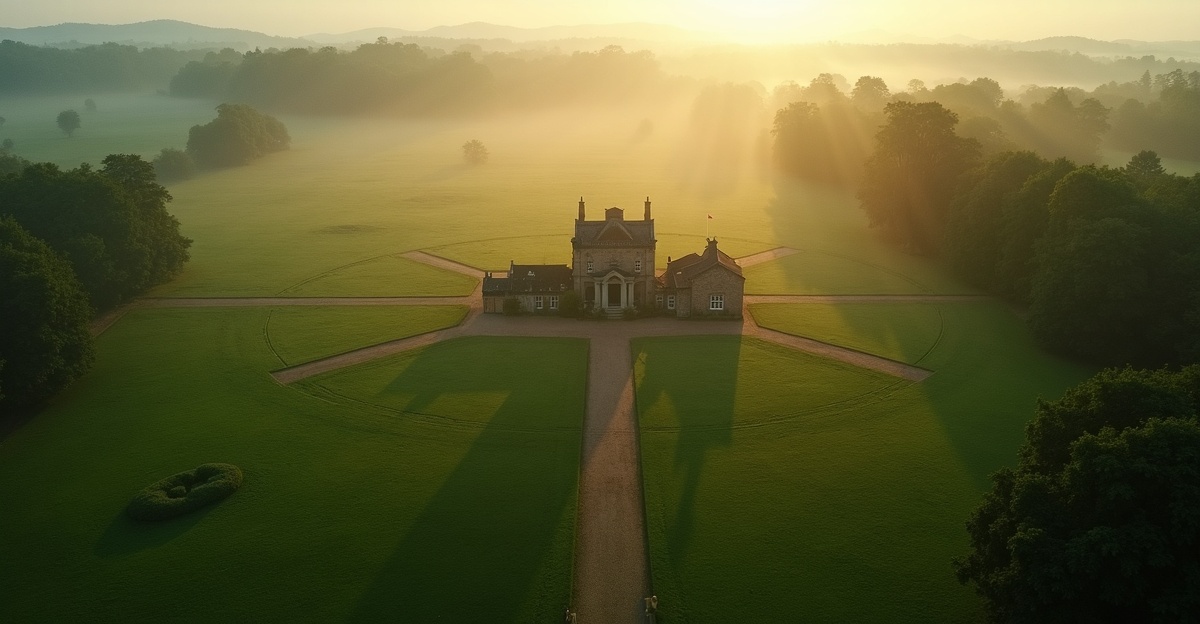
The estate is larger than any one horse can show you.
Want the visual guide? Seven horses. Seven patterns. One page each. Free.
Free Download
The Stable of Emotions: A Visual Guide
Five horses. Five patterns. One page each. A framework for seeing the emotions that run your days.
Comments
Stay Curious
New essays on consciousness, perception, and the questions worth sitting with. Delivered to your inbox when they are ready.