The Inner Life as the Last Frontier
There is a peculiar kind of ignorance that grows alongside achievement. The more precisely a life is organized, the less room it leaves for the question of whether it is pointed in the right direction. I know this because I have built that kind of life, and I have felt the silence underneath it.
This is not a failure of intelligence. It is a failure of attention.
The great project of the last several centuries has been external. Conquer distance. Defeat disease. Organize labor. Accumulate. The results are genuinely remarkable. Whatever the costs, there is no honest account of modern life that ignores the reduction of suffering that external progress has achieved.
But somewhere inside that project, a particular assumption took hold: that the outer world was the real world, and the inner world was noise to be managed. Sentiment. Distraction. Something to be quieted so you could get back to the actual work.
Systems were built for everything except this.
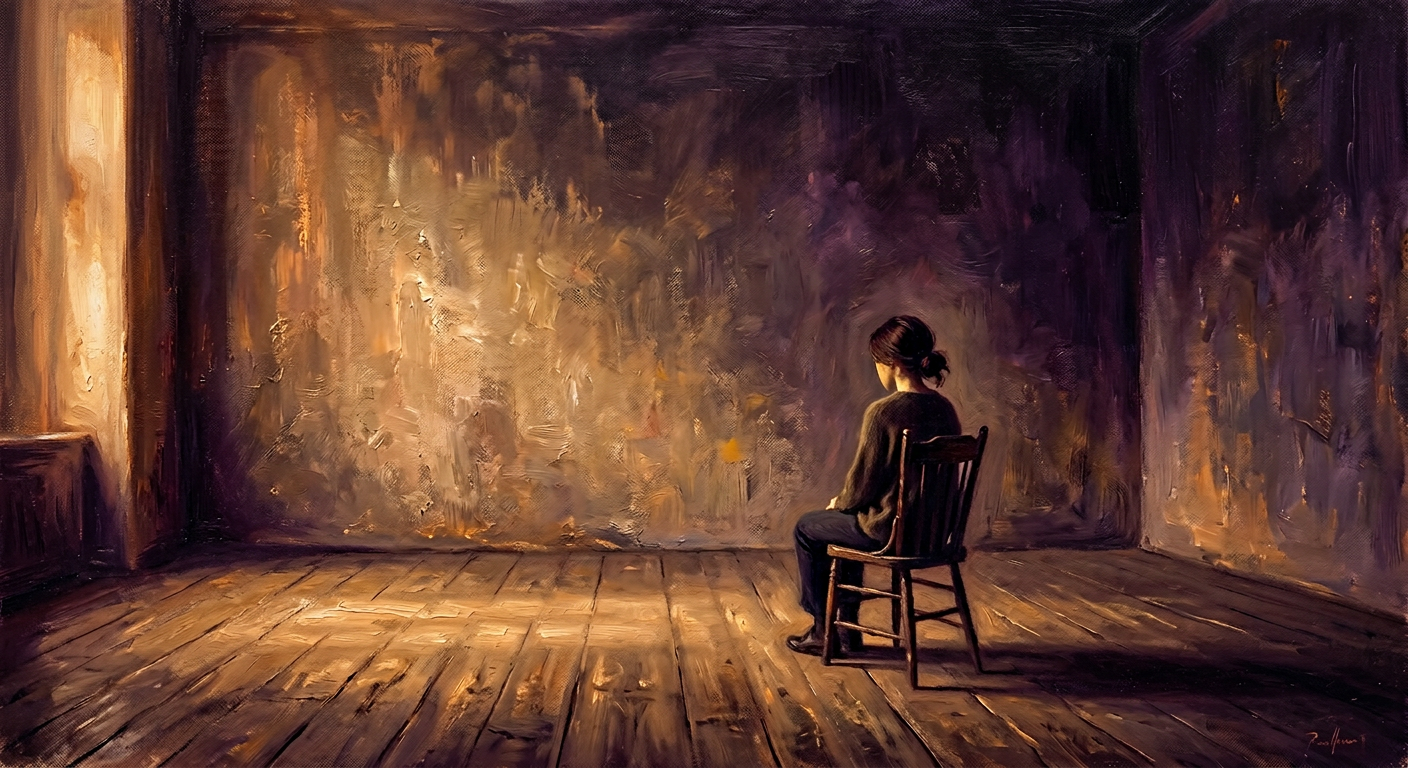
Pascal, writing in the seventeenth century, noticed something that has only become more acute with time. He observed that all of humanity's problems stem from the inability to sit quietly in a room alone. He did not mean this as a moral judgment. He meant it as a psychological description. The world offers constant motion, and motion feels like purpose, and purpose feels like being alive. To sit still is to let the silence in. And the silence asks questions.
Most people will do almost anything to avoid those questions.
I am not exempted from this. I know what it is to fill a day with motion, to arrive at night having covered ground and produced output and handled things, and to feel, underneath it all, something unexamined and accumulating. Not grief exactly. Not anxiety exactly. Something older than either of those words. A kind of interior weight that polite society provides no language for.
What Happened to the Inner Life?
A few things at once, I think. Religion, which once gave that life its scaffolding, became untenable for a growing number of people. The secular alternatives were thinner. Therapy helped some people with some things, but it tended toward the clinical, toward diagnosis and function, toward returning people to productivity rather than asking whether the productivity was pointed in a meaningful direction.
Then came the self-help industry, which colonized the territory religion had vacated and proceeded to redecorate it with hustle. Morning routines. Gratitude journals. Mindfulness repackaged as a focus hack.
None of these are bad. Some of them help. But the contemplative tradition was stripped of its depth and sold as a delivery mechanism for becoming more productive. Inner life became a service industry. And like all service industries, it optimized for what people would pay for: the promise of feeling better, rather than the harder work of seeing clearly.
This is not cynicism. It is a description of a substitution.
Socrates believed that the unexamined life was not worth living. He did not mean this as an aphorism for motivational posters. He meant it as a claim about what constitutes a life at all, as opposed to a mere occurrence. The examined life, in his framework, was not a hobby or a supplement. It was the thing itself. Everything else was the surrounding condition.
That priority has been reversed. The examined life has become the supplement.
The Territory
Here is the territory I am trying to name.
Not therapy. Not spiritual bypassing. Not journaling as content creation. Not meditation retreats as identity markers. Not the library of frameworks and models people acquire to describe their inner landscape without actually entering it.
I mean something more raw. The direct encounter with one's own consciousness, prior to interpretation. The capacity to be a witness to one's own experience without immediately converting that experience into a narrative, a lesson, or a product.
This is genuinely difficult. I do not mean this in a motivational sense, as in "it's hard but worth it." I mean it in the same way that any rigorous discipline is difficult: it requires sustained practice, it resists shortcuts, and it produces results that are not legible to people who have not done it. You cannot explain what you find in the interior without sounding either mystical or trivial. The language fails. The map is not the territory, and for the inner life, the maps we have are old and worn and contested.
I am not offering a better map.
What I am arguing is that the territory is real, and that we have collectively agreed to treat it as optional, and that this agreement is the source of a great deal of the misery that sits underneath our otherwise successful lives.
Who This Is For
There is a particular kind of person I am writing this for.
You are not lost. That would be simpler. You have built things. You have succeeded by the available measures. You have done the reading, more or less, and the therapy, more or less, and you have arrived somewhere that looks like a destination from the outside and feels like a waiting room from the inside.
You do not need more information. You do not need another framework or another book or another podcast episode. What you have is a longing that refuses to be named, and an intellectual restlessness that has tried philosophy, and spirituality, and various traditions, and found them either too certain or not quite honest enough.
I recognize you because I am you.
Not a Destination
The inner life is not a destination. I want to be clear about this, because the tendency is to reach for it as though it were another goal to be achieved, another acquisition to add to the list. "I'm working on my inner life." That sentence is almost certainly a sign that something has gone sideways already.
What I mean by inner life is closer to what Pascal meant. What the Stoics meant. What the contemplative traditions across cultures have always pointed toward, imperfectly and through their own distortions. The capacity to be genuinely present to one's own experience. To witness it without collapsing into it. To allow what is real to become visible rather than manageable.
This is not a productivity technique. It does not make you better at your job, necessarily. It does not optimize your sleep or sharpen your focus or help you close more deals. It might, in fact, make those things feel less urgent. And that is precisely why the market has no use for it.
Why I Started Writing Here
I started writing here because I could not find the conversation I was looking for anywhere else.
Not in the spiritual content that promises transformation while selling certainty. Not in the philosophical journals that maintain rigor by sacrificing contact with actual experience. Not in the therapy rooms that treat consciousness as a malfunction to be corrected. Not in the religious traditions I was raised adjacent to but could never fully enter.
I wanted something that was willing to stay in the question. That was honest about not knowing. That brought genuine intellectual discipline to the interior without pretending that discipline was enough, or that the interior would eventually yield to analysis.
This is what I am trying to build here. Not a school. Not a system. Not an answer.
A practice of honest inquiry. Conducted in public. With whatever rigor I can bring on a given day, and whatever honesty I can manage about the days I cannot.
The Frontier
The frontier is inward. It has always been inward.
Everything else that has been explored, built, conquered, and optimized was preparation for this, or distraction from it, or both. The question of what it is to be alive, of what constitutes a genuine human existence, of what lies beneath the performance and the productivity and the accumulated credential of a life well managed outwardly. This question has not been answered. It has not even, as a culture, been agreed that it is worth asking.
I am asking it.
I do not know where it leads. That is the only honest thing I can say.
But I know that not asking is its own kind of answer, and I have already lived enough of that answer to know I would rather sit with the uncertainty than continue not asking.
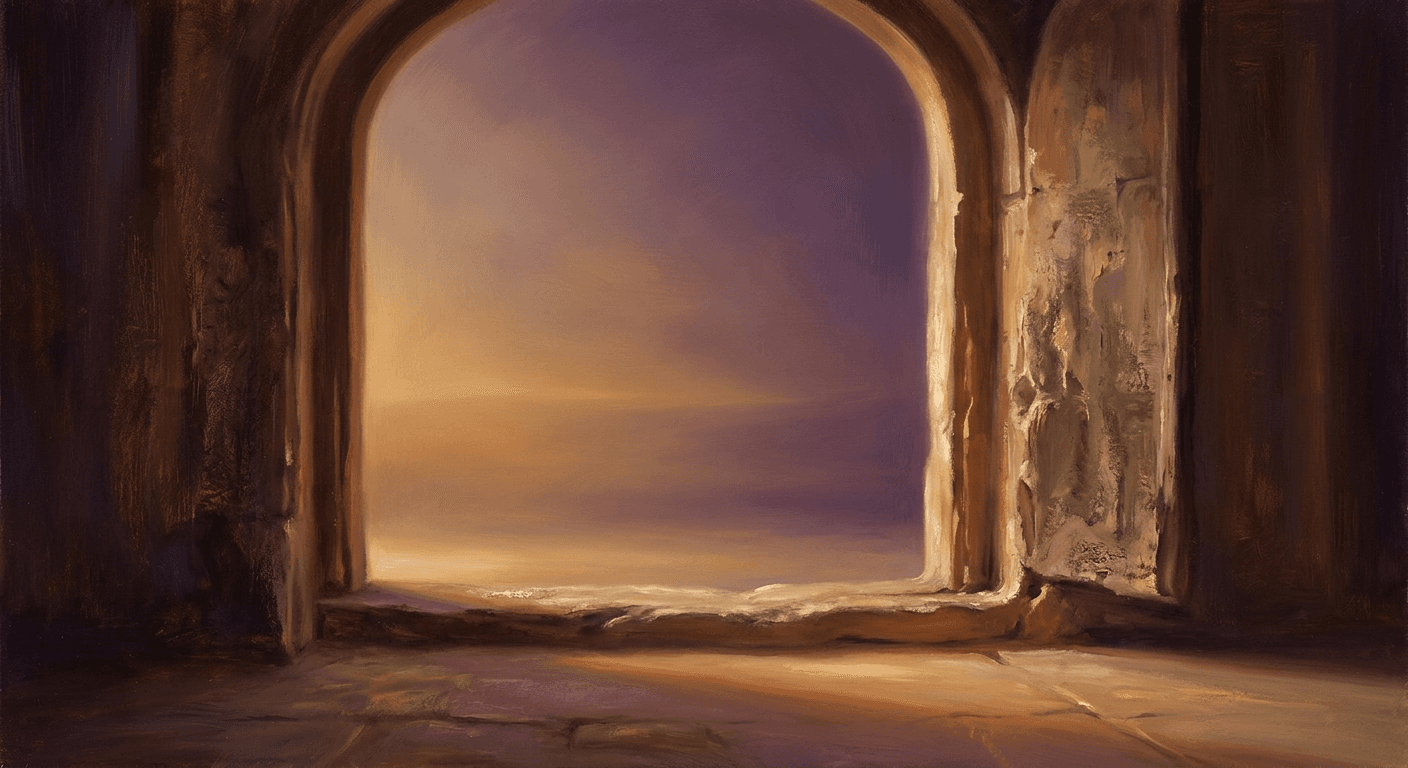
The door is here. It has always been here.
Comments
Stay Curious
New essays on consciousness, perception, and the questions worth sitting with. Delivered to your inbox when they are ready.