
A Quiet Unease
There is a subtle unease many people feel but rarely name.
A sense that meaning, money, and even thinking itself have been quietly outsourced to institutions, experts, algorithms, and authorities that were once necessary, but now feel distant and impersonal.
What’s emerging in response isn’t rebellion. It’s reclamation.
Across culture, three seemingly unrelated movements are rising in parallel:
- the growth of Spiritual But Not Religious (SBNR) identity
- the adoption of Bitcoin as decentralized money
- the rapid normalization of AI as personal intelligence
These are not isolated trends. They are expressions of a single pattern:
a return to direct access without intermediaries.
Welcome to the Age of Sovereignty.
Sovereignty Beyond Politics
Sovereignty is usually framed in political terms nations, borders, power.
But at its core, sovereignty is simpler and more personal:
the ability to access truth, value, and capability without requiring permission.
For centuries, authority over meaning, money, and expertise was centralized because it had to be. Scarcity demanded institutions. Filters were necessary.
Today, technology has dissolved much of that scarcity.
What once protected now often constrains.
The modern impulse toward self-sovereignty isn’t about rejecting systems it’s about realizing that many intermediaries are no longer required for everyday life.

The internet dissolved gatekept knowledge structures.
The Internet and the Decentralization of Knowledge
Before the internet, knowledge moved slowly and hierarchically.
Universities, churches, publishers, and media organizations decided what counted as legitimate understanding.
The internet shattered that monopoly.
Today, an individual can:
- learn meditation on YouTube without joining an ashram
- study philosophy without enrolling in a university
- cross-reference claims instantly instead of deferring to authority
This shift didn’t eliminate truth.
It eliminated exclusive access to truth.
And from that opening, a new spiritual orientation emerged.

Spiritual authority returning to lived experience.
SBNR as Spiritual Sovereignty
SBNR: Spiritual But Not Religious is often misunderstood as indecision or dilution.
In reality, it reflects a decentralization of spiritual authority.
Instead of outsourcing meaning to doctrine, individuals are synthesizing insight through direct experience, drawing from:
- mysticism
- Buddhism
- Christianity (especially its esoteric roots)
- non-dual philosophy
- indigenous wisdom
This is not rejection. It is integration.
SBNR is not the absence of spirituality.
It is spiritual sovereignty direct experience over borrowed certainty.
Bitcoin and the Decentralization of Money
Just as the internet decentralized knowledge, Bitcoin decentralizes value.
Traditional monetary systems depend on centralized trust and enforced participation. Bitcoin offers an alternative: transparent rules, voluntary adoption, and self-custody.
Money is stored human energy time, labor, attention, creativity.
When individuals can hold and transfer that energy without permission, sovereignty becomes tangible. Not ideological. Practical.
Self-custody is not a slogan. It is responsibility in cryptographic form.
Bitcoin doesn’t require belief. It requires understanding.
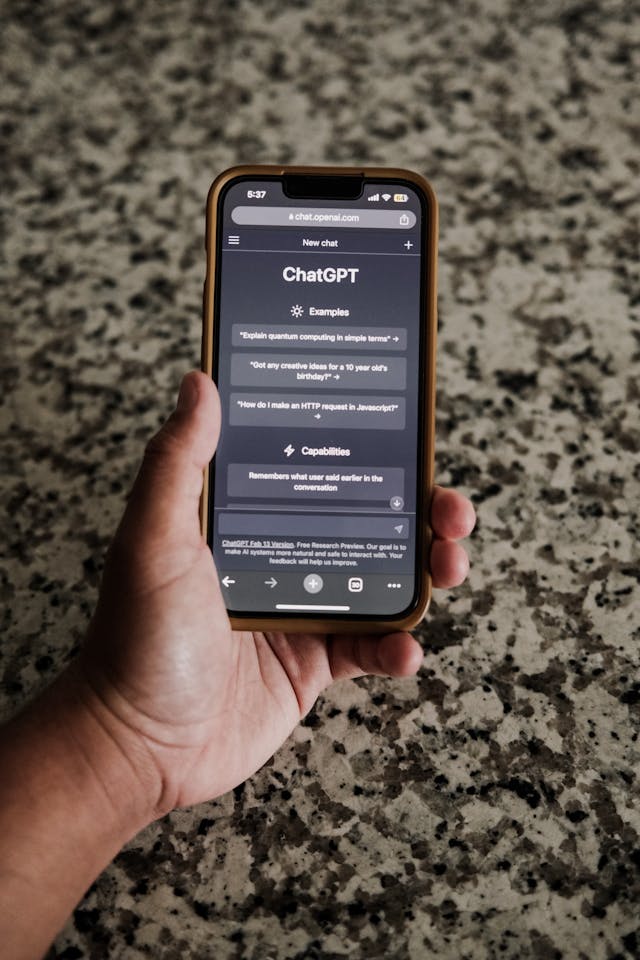
Expertise becomes personal and on-demand.
AI and the Decentralization of Expertise
Artificial intelligence completes the sovereignty triad.
Where expertise once required institutional access, AI now offers individuals:
- research capability
- creative assistance
- personalized learning
An AI tutor at midnight. A research assistant on demand. A thinking partner that reduces the distance between curiosity and competence.
AI does not replace wisdom.
It removes dependency.
And with that removal comes a new burden: the responsibility to think clearly, ethically, and independently.
The Pattern Beneath the Trends
What connects SBNR spirituality, Bitcoin, and AI is not ideology but structure.
Spirituality
Dogma → Direct experience
Knowledge
Gatekept → Open
Money
Centralized → Distributed
Expertise
Institutional → Augmented
This is the architecture of self-sovereigntya decentralized future built on inner authority rather than external permission.
The Shadow Side of Decentralization
Decentralization is not automatically wisdom.
- SBNR without grounding becomes spiritual bypassing
- Bitcoin without ethics becomes greed
- AI without discernment amplifies ego
- Freedom without responsibility fragments the self
Sovereignty demands maturity.
The question is no longer “Can we access more?” It is:
Can we become the kind of people who can handle what we access?
Three Anchors for Mature Sovereignty
- Discernment – verify, reflect, and test what you adopt
- Ethics – let freedom deepen responsibility, not justify impulse
- Embodiment – truth must be lived, not merely consumed
What the Age of Sovereignty Asks of Us
The Age of Sovereignty asks us to reclaim responsibility for:
- our beliefs (meaning)
- our finances (value)
- our thinking (discernment)
This is not a rejection of institutions. It is a graduation from institutional childhood.
We are no longer passive recipients of reality.
We are participants.
A Quiet Remembering
SBNR is not a trend. Bitcoin is not just technology. AI is not merely automation.
Together, they signal a cultural return to self-authorship a remembering of inner authority in a decentralized world.
The Age of Sovereignty is not about escaping the world.
It is about finally meeting it awake.
Reflection
Where are you reclaiming authority in your life right now meaning, money, or mind?
If this resonated, share your reflection in the comments and subscribe for weekly insights on spiritual sovereignty in a decentralized future.
Comments
Stay Curious
New essays on consciousness, perception, and the questions worth sitting with. Delivered to your inbox when they are ready.